London, England – In an emotional scene outside the British Prime Minister’s residence at 10 Downing Street, Keir Starmer announced his resignation as Prime Minister on Monday morning. This brings to a close a leadership period marked by significant challenges and mounting political pressure.
Farewell moments
Starmer appeared visibly moved as he delivered his final address, his voice breaking with emotion as he praised the support of his family. “As I leave the biggest job in the country,” he said, his voice trembling, “I will spend more time on the most important job of all: being the best husband I can be to my wonderful wife, Vic, and the best father I can be to my beautiful children, who are my pride and joy.” He described entering Downing Street as “the proudest moment of my life” and affirmed his acceptance of the end of his term in an orderly democratic transition.
Burnham: A new mandate or continuity?
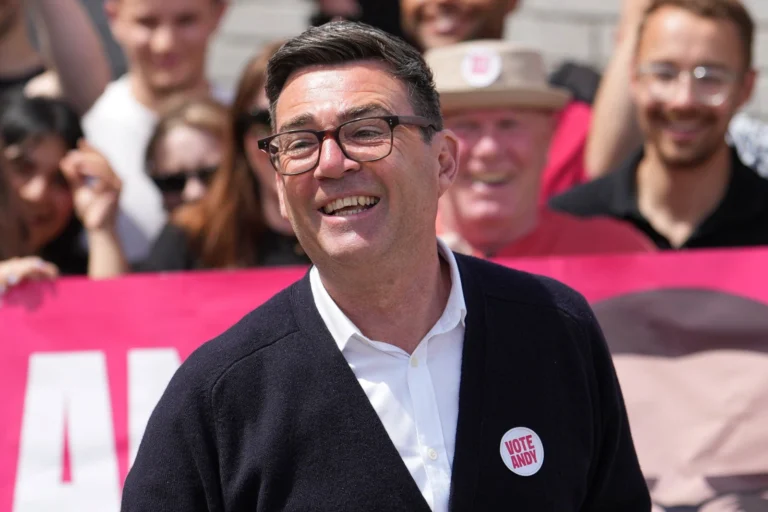
Meanwhile, all eyes are on Andy Burnham, the frontrunner to succeed Starmer. He is heading to Westminster today to be sworn in as the new MP for Mackerfield after his decisive victory in the by-election. In a move that could reshape the British political landscape, sources within the Labour Party have indicated that Burnham may choose to call for an early general election as soon as he takes office.
A source close to Burnham explained that he feels a strong need for a “new mandate” from the public to implement sweeping structural reforms to the economy and the constitution. The source indicated that his remaining in office for the remainder of the current parliamentary term is not certain, according to The Telegraph. These sentiments began to emerge following comments made yesterday by Home Secretary Mike Tapp, which implicitly called for a new public mandate.
opposition criticisms
In response, the Conservative Party was quick to attack the change, viewing it as an attempt to avoid confronting the real crises. A Conservative spokesperson stated that “replacing Sir Keir Starmer with Andy Burnham will not fix Britain,” emphasizing that the country’s problems are not related to the leader but are “a structural problem within the Labour Party itself.” The Conservatives also criticized the lack of serious solutions for social welfare and illegal immigration in the current Labour government’s record.
Starmer is expected to remain in Downing Street temporarily until the leadership challenge is complete, to ensure a smooth transition of power. These developments come amid expectations that Burnham will assume the premiership by September at the latest, a crucial juncture that could shape the future of British politics for years to come.