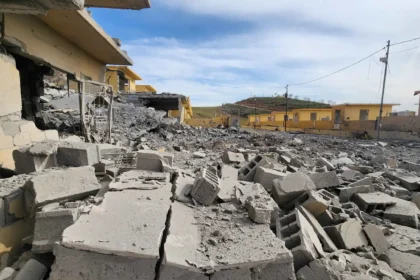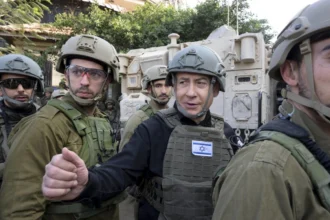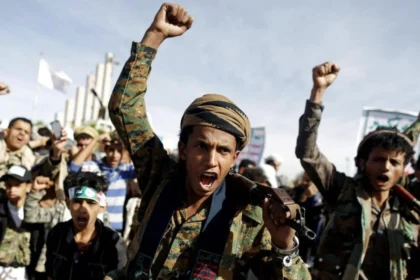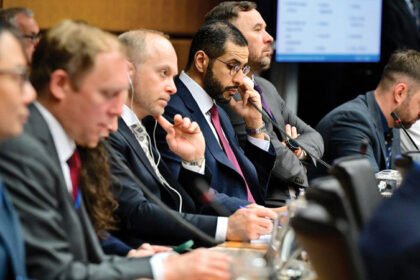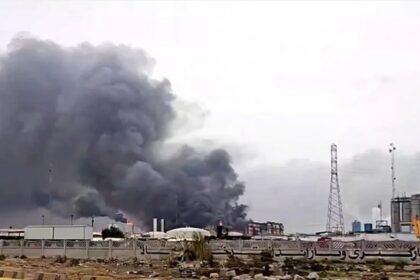
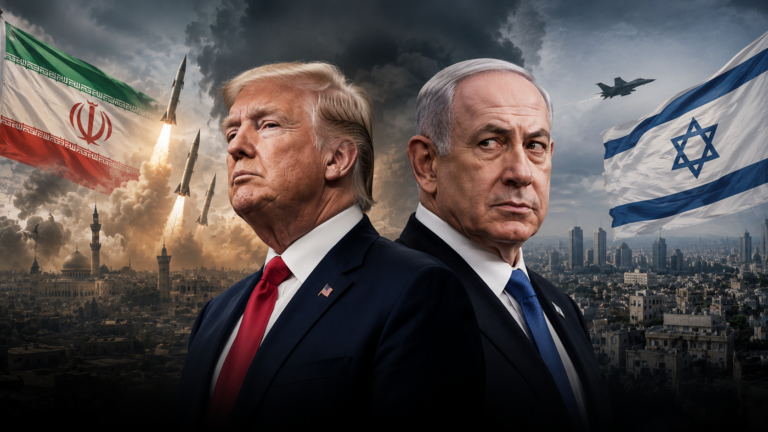
Washington, DC – At a highly sensitive regional moment, Iran’s recent strikes against Israeli targets have reignited questions about the extent of US influence over Israeli Prime Minister Benjamin Netanyahu’s government. They have also raised questions about President Donald Trump’s ability to control the escalation in a region teetering on the brink of a wider confrontation. While the US administration has sought to avert a regional conflagration that could derail negotiations and threaten international stability, the tit-for-tat military actions have highlighted a growing gap between US calculations and Israel’s security vision.
Netanyahu and Trump: A strategic alliance not without its disagreements
Despite the close political relationship that has bound Trump and Netanyahu for years, recent developments have shown that the alliance between the two men does not necessarily imply a complete alignment of interests or priorities. The White House, on the one hand, views the current escalation from a broader perspective, linking it to regional security, the stability of energy markets, and the global economy. On the other hand, Netanyahu focuses on what he considers an existential threat emanating from Iran and its network of regional allies.
Political indicators suggest that Israel is becoming more willing to make unilateral military decisions. This is happening even in situations where Washington prefers to give the diplomatic track another chance.
Iranian strikes: A turning point in the rules of engagement
Observers believe that the recent Iranian attacks were not merely a limited military response, but carried multiple political and strategic messages. Tehran sought to demonstrate its ability to retaliate directly without relying entirely on its regional allies. Furthermore, it wanted to send a message that any targeting of its interests would not go unpunished.
Conversely, Israel believes that ignoring these messages or failing to respond decisively to them could weaken its deterrent power. This comes at a time of rapidly shifting regional power balances.
Has Trump succeeded in containing the crisis?
The most common answer among Western analysts is that Trump succeeded in delaying some steps toward escalation, but he was unable to prevent them entirely. While Washington exerted political and diplomatic pressure to avoid a wider confrontation, Israel retained the right to make its own military decisions based on its own security assessments. These developments reflect a significant shift in the US-Israeli relationship. Currently, Washington’s ability to influence the details of Israeli military decisions is more complex than in previous periods.
The Pentagon is caught between concern and caution.
Within the US security establishment, fears are growing that any miscalculation could lead to a broad regional confrontation involving multiple parties. Any expansion of the scope of conflict may threaten international navigation, raise oil prices, and place American forces deployed in the region facing increasing security challenges. Therefore, Washington is currently focusing on managing the crisis and preventing it from turning into open war. This escalation may go beyond the limits of the bilateral confrontation between Iran and Israel.
Scenarios for the next phase
International affairs experts predict three main paths in the coming weeks:
1. Mutual containment of escalation
It is based on implementing limited and measured responses from both sides without sliding into an all-out war.
2. Gradual escalation
This is characterized by the continuation of intermittent exchanges of fire, with the scope of military targets expanding.
3. A broad regional confrontation
This is the most dangerous scenario, and it includes the involvement of additional regional actors and global economic and security repercussions.
The current crisis reveals that the Middle East has entered a new phase of complex power balances, where traditional alliances are no longer sufficient to guarantee complete control over the course of events. While Trump attempts to maintain room for political and diplomatic maneuvering, Netanyahu appears to be operating according to a different security equation. Therefore, the most pressing question in the coming period is not only whether Washington can restrain Israel, but also whether the entire region can avoid a confrontation that could redraw the map of the Middle East.