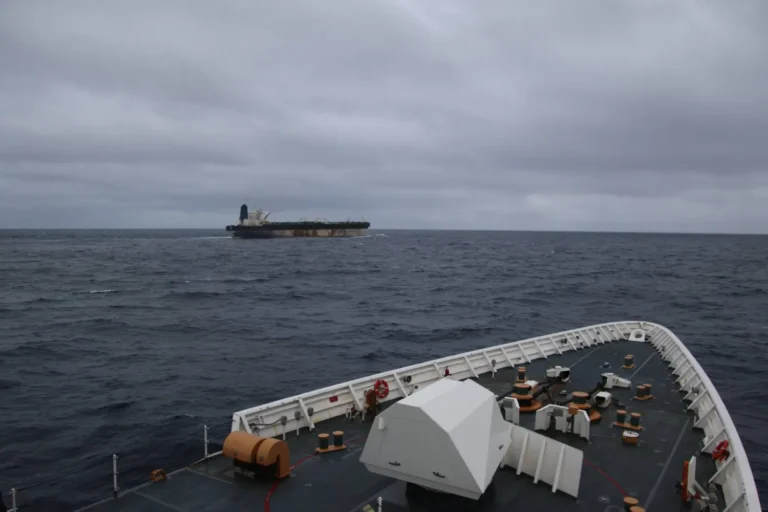
Moscow, Russia – Diplomatic and maritime tensions between Russia and France have escalated following Paris’s announcement that it had intercepted and seized the oil tanker Tagor in the Atlantic Ocean, claiming it was subject to international sanctions. In a swift and firm response, the Kremlin rejected the French justifications for the action, which it described as an “illegal act” amounting to “international piracy.”
Accusations of piracy and rejection of legal justifications
In a press statement on Monday, Kremlin spokesman Dmitry Peskov confirmed that Moscow categorically rejects French claims that the seizure measures comply with maritime law. Peskov stated, “We consider such actions illegal and tantamount to acts of international piracy.” He emphasized that Russia will continue to take all necessary measures to ensure the security and safety of its maritime shipments, particularly in light of the increasing risks and negative experiences it has encountered recently.
For its part, the Russian Embassy in Paris revealed crucial procedural details, confirming that French authorities had not notified the Russian side in advance of the measures taken against the vessel. Initial reports indicated that the captain of the tanker “Tagoor” is a Russian citizen. This adds a consular dimension to the current crisis.
The context of the tension and the “shadow fleet”
This incident follows French President Emmanuel Macron’s announcement via the “X” platform that the French navy, with British and international partners’ support, successfully intercepted the tanker, which had departed from a Russian port. This French action is part of an escalating European campaign to monitor and restrict what is known as Russia’s “shadow fleet.” Western capitals accuse this fleet of being a Russian means of circumventing sanctions imposed on its oil exports.
This is not the first such incident; on March 20, the French Navy carried out a similar operation in the western Mediterranean against the tanker “Dina,” which was flying the Mozambican flag and had departed from the port of Murmansk. That standoff lasted until April 16, when French authorities released the “Dina” after it paid a fine. Moscow at the time considered this an unjustified restriction on maritime trade.
The seizure of the Tagor tanker presents Russian-European relations with a new test. This comes especially as Moscow affirms its determination to secure its oil shipping lanes, raising concerns that the oceans and seas could become a new arena for indirect confrontation and defiance of international sanctions. This is all unfolding against the backdrop of an arms race waged through both legal resolutions and military measures.