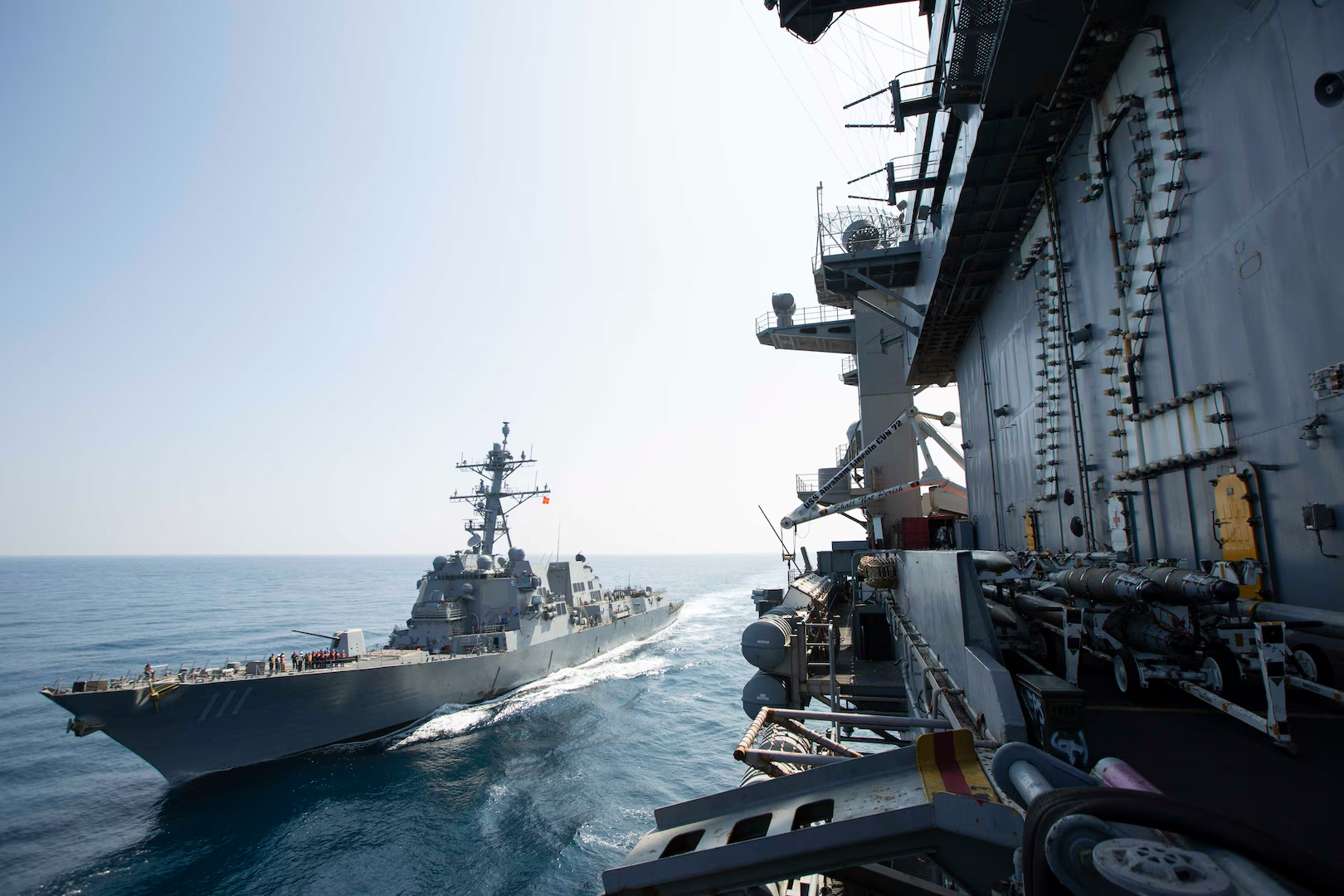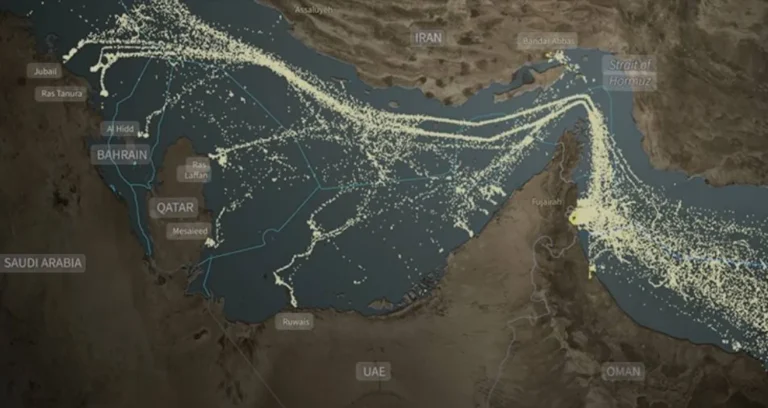
London, Britain – The United Kingdom Maritime Trade Operations (UKMTO) issued a strongly worded statement confirming the continuation of the maritime blockade imposed on the ports of the Islamic Republic of Iran, warning that the level of maritime threat in the Arabian Gulf, the Strait of Hormuz, the Sea of Oman and the northern Arabian Sea has reached “critical” levels.
Warnings of escalating measures
The organization explained in its document that the scope of the blockade is not limited to Iranian ships only, but extends to any naval vessels that provide assistance to “blockade violators” through ship-to-ship transfers, stressing that these ships will be considered a legitimate target for punitive measures.
The statement stressed that failure to immediately comply with the orders of the besieging forces would be met with firm and direct measures, which could include obstructing the movement of ships or even causing devastating damage to them, including setting them on fire.
Confusion in the political and field scene
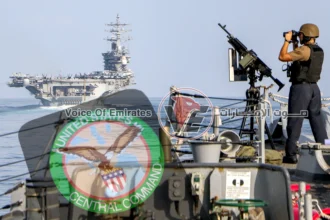
In a related context, the Tasnim news agency, which is close to the Iranian Revolutionary Guard, revealed a contradiction between the political discourse and the reality on the ground, as the sailors confirmed that the warnings of the US Central Command (CENTCOM) to stop Iranian ships are still in effect on the ground, despite the statements of US President Donald Trump, who previously indicated the possibility of lifting the embargo.
This gap between diplomatic promises and military escalation was reflected in a sharp tweet by Mohsen Rezaei, advisor to the Iranian Supreme Leader and member of the Expediency Discernment Council, who accused the US president of “betraying diplomacy for the third time.”
Rezaei wrote on his X account (formerly Twitter): “By continuing the naval blockade and his hardline stance in negotiations, the US president has proven more than ever that he is not a negotiator and that he is pursuing objectives other than those he has publicly stated.”
This escalation comes at a time when the region is experiencing unprecedented tension, with the continuation of naval operations within what is known as the “Freedom Project,” which aims to secure international waterways, making navigation in the Strait of Hormuz and its surroundings live in a state of anticipation and extreme caution in anticipation of any military clash that may change the rules of engagement in the region.