Brussels, Belgium – Amid the rapidly escalating military tensions in the Strait of Hormuz on Thursday morning, Kaya Kallas, the EU’s top diplomat, issued a stark warning about the dangers of a continued military confrontation between the United States and Iran. During a meeting of EU foreign ministers in Cyprus, Kallas emphasized that “a continuation of the war is not in anyone’s interest.” She further stressed that the region is now caught in a “very dangerous” situation, teetering between the specter of war and fragile peace efforts.
Details of the military clash
Callas’s remarks came in the wake of a series of tit-for-tat strikes, the most intense since the ceasefire agreement was reached last April.
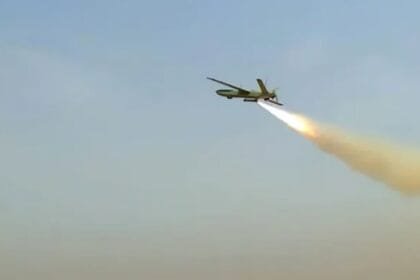
According to a statement from U.S. Central Command (CENTCOM), U.S. forces shot down four Iranian “suicide” drones that posed an immediate threat. Furthermore, they targeted a ground control station in Bandar Abbas that was preparing to launch a fifth drone. Washington described these operations as “purely defensive,” aimed at protecting its forces and maintaining the stability of the truce.
In response, the Iranian Revolutionary Guard announced that it had targeted a US airbase at 5:00 AM, describing the attack as a “serious warning” against any future aggression. It also asserted that Iranian responses would be even more decisive should such attacks be repeated. While the Iranian statement did not specify the location of the targeted base, reports from the Kuwaiti military of intercepting “hostile threats” in its airspace fueled speculation about a wider escalation of tensions.
Conflicting field accounts
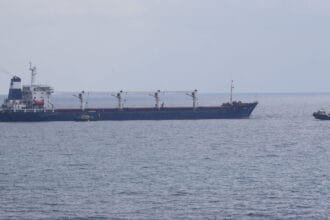
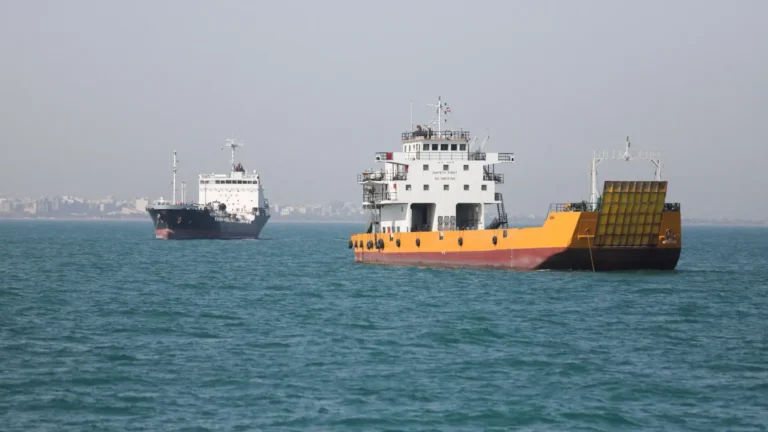
The early hours of Thursday morning were marked by confusion on the ground, as Iranian news agencies, such as Fars and Tasnim, circulated a version of events that differed from Washington’s official account. These sources claimed that the clashes erupted because US ships attempted to cross the Strait of Hormuz without prior coordination. As a result, the Iranian navy responded, leading to an exchange of fire and the activation of air defenses in Bandar Abbas.
This escalation comes at a time when international actors are trying to contain the situation, with observers viewing Thursday’s incident as a true test of the ceasefire agreement. As the exchange of fire continues and regional actors remain on high alert, diplomatic pressure is mounting to prevent the region from sliding into open conflict that could alter the balance of power in the world’s most important energy waterway. This is especially true after Washington asserted that the strikes were carried out in self-defense. Tehran, on the other hand, views them as a crossing of red lines.