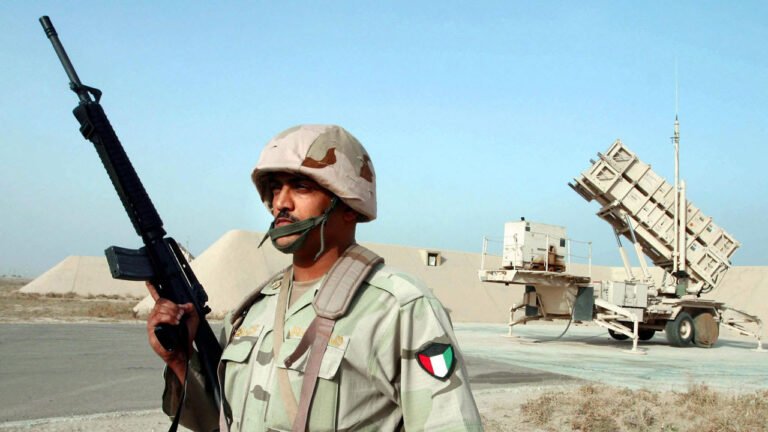
Kuwait – The Kuwaiti army announced in an official statement issued Thursday morning that the country’s air defense systems successfully intercepted and repelled “aerial threats.” The threats consisted of missiles and drones described as “hostile.”
The statement explained that the loud explosions heard throughout the country were the result of air defenses engaging these targets. The statement also emphasized that the situation was under control.
Calls to adhere to security instructions
The army command called on citizens and residents to remain calm and fully comply with security and safety instructions issued by official authorities. The command also requested that the public refrain from spreading rumors that could affect national security.
The military statement did not specify the source of these threats or the party that issued them.
Link to US-Iranian tensions
These developments on the ground follow airstrikes launched by Washington early Thursday morning, allegedly targeting Iranian drone operations. The US claimed these drones posed a direct threat to its forces and to commercial shipping in the strategic Strait of Hormuz. Iran, in turn, confirmed the US attack and announced that it had targeted a US airbase at 4:50 AM. Iran framed this as retaliation for a US attack on an area near Bandar Abbas airport, without specifying the location of the targeted base.
Kuwaiti position and regional context
Despite the presence of a US airbase on Kuwaiti soil, Kuwaiti authorities have been careful not to directly accuse Iran of being behind the intercepted threats.
This security incident serves as a reminder of the instability that plagued the Gulf states during the period of open conflict between Tehran and Washington. Although a ceasefire agreement has taken effect and military operations have significantly decreased, the region continues to experience sporadic violations. These violations involve the launching of drones from Iraqi territory toward Gulf states, including Kuwait and Saudi Arabia. Thus, security tensions persist in a region already suffering from fragile stability.