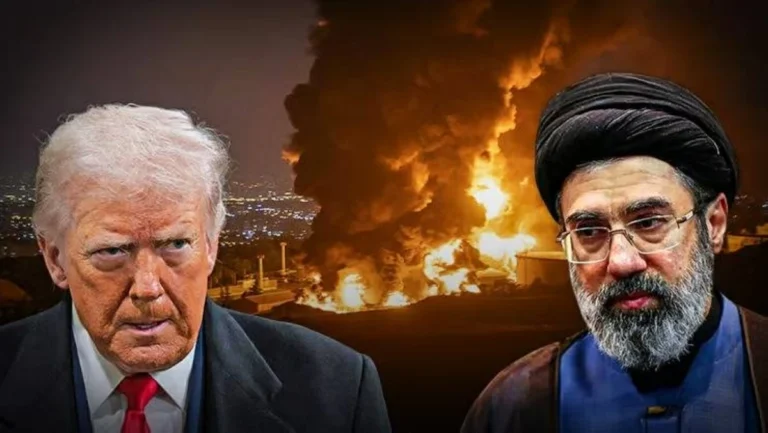
Washington, DC – A lengthy report published by The Wall Street Journal on Sunday, May 10, 2026, citing US and Iranian officials, indicates that deep uncertainty prevails in Iranian political circles regarding the fate of Supreme Leader Mojtaba Khamenei. This comes after his complete absence from public view for more than two months, following his serious injuries in an airstrike that targeted his father, Ali Khamenei, and his wife on March 30. The airstrike resulted in their deaths.
Artificial intelligence and “fabricated” images
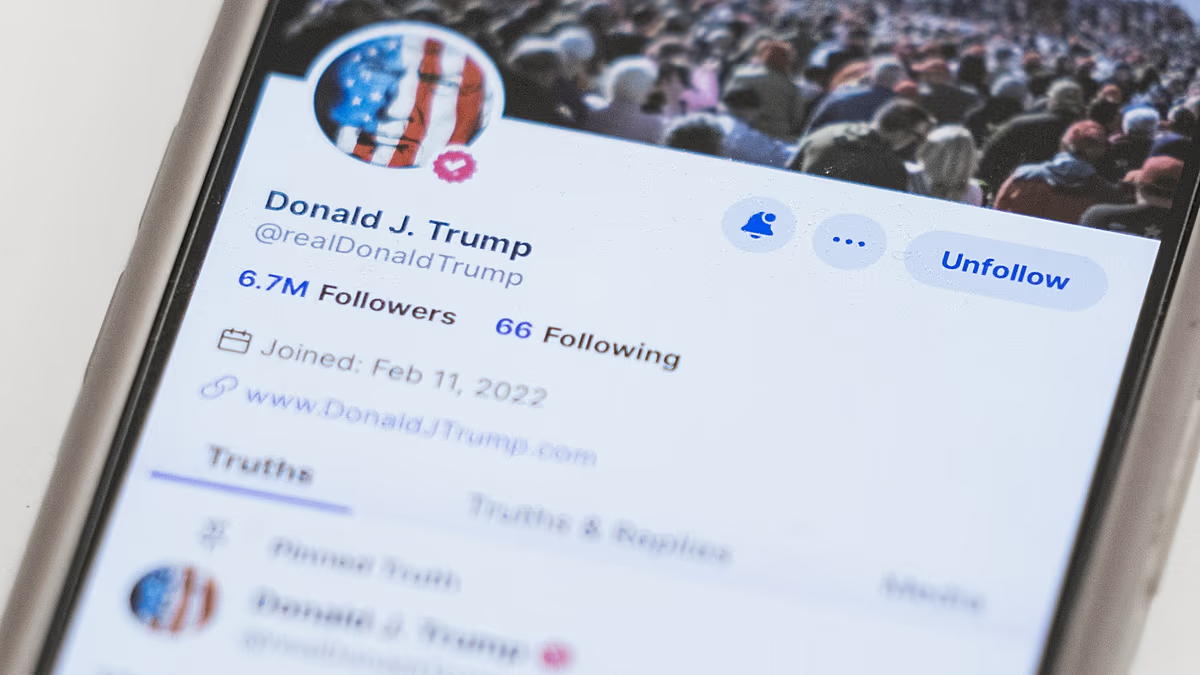
According to the report, Mojtaba Khamenei’s absence was not merely physical; it extended to the lack of any concrete evidence of his survival. Since the airstrike, no authentic photos or audio recordings of him have been released. Only purported messages and images that appear clearly to have been altered or created using artificial intelligence have surfaced, including those displayed on billboards in Tehran and on his X-platform account. This media blackout has led many Iranians and international observers to question whether the new leader truly survived the attack.
Summit conflict erodes unity
This absence has led to unprecedented and sharp disagreements between factions within the Iranian regime, which had maintained their unity throughout the war. Media sources have reported escalating tensions between the government led by Masoud Pezeshkian and military commanders, particularly the Revolutionary Guard. The core point of contention revolves around the extent of concessions that should be made to the United States to reach an agreement ending the war, given the absence of the Supreme Leader’s final say.
Researcher Arash Azizi of Yale University points out that hardliners question the legitimacy of any negotiations held in Khamenei’s absence and strongly oppose the role of Parliament Speaker Mohammad Bagher Ghalibaf, whom they describe as “soft-willed.” Demands have also grown among regime supporters for Khamenei to issue at least one audio message to dispel any doubts and endorse the negotiation process.
Conflicting accounts and myths
In an attempt to quell suspicions, President Masoud Pezeshkian claimed to have attended a two-and-a-half-hour meeting with Khamenei. However, exclusive information obtained by Iran International refuted this claim, confirming that the meeting did not take place. Meanwhile, authorities justified the disappearance by citing “security concerns.” They also asserted that Mojtaba remains on Israel’s assassination target list.
In a statement that sparked ridicule and controversy, Salar Velayatmadar, a member of the parliament’s National Security Committee, claimed that keeping Khamenei’s photos secret was intended to protect him from “aliens and strange sciences.” Analysts interpreted this as an indication that a segment of the regime remains mired in superstition and amulets to manage an existential crisis.
Late clarifications do not dispel doubts
In conclusion, Mazaher Hosseini, an official in the Supreme Leader’s office, revealed details of Mojtaba’s injuries for the first time, stating that his knee, back, and the area behind his ear were damaged in the attack. He claimed, however, that Mojtaba was in good health. Nevertheless, doubts persist. The prevailing perception is that Khamenei has either been killed or is too ill to govern. This leaves Iran adrift, facing crucial negotiations and an internal power struggle.