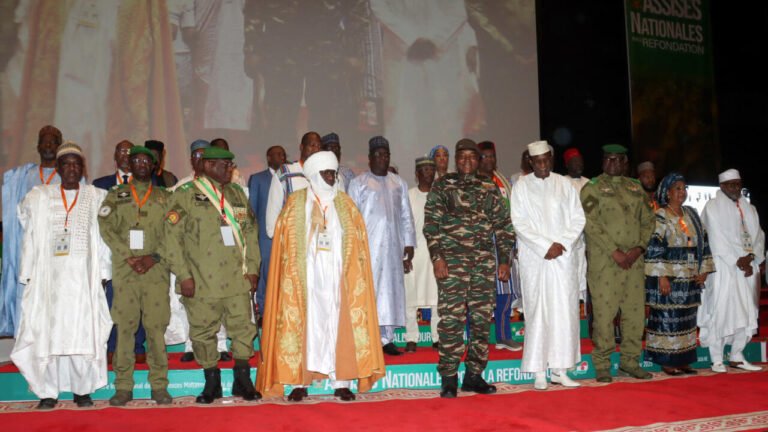
Niamey, Niger – In a new escalation that deepens the diplomatic rift between Niamey and Paris, Niger’s ruling military junta announced on Saturday, May 9, 2026, the immediate and complete suspension of broadcasts and operations of nine major French media outlets. The decision was made under the pretext of protecting “public order.” It also came in response to what the junta described as attempts to destabilize national institutions and social cohesion in the country.
The blacklist: a digital and space-based “guillotine”
The ban included major French media outlets covering African and international affairs, namely: France 24, Radio France Internationale (RFI), France Afrique Media, LSI Africa, Agence France-Presse (AFP), TV5 Monde, TF1 Info, Jeune Afrique, and the investigative website Mediapart.
According to a statement broadcast on Nigerien state television, the suspension extends beyond traditional radio and television broadcasts to include “satellite packages, cable networks, digital platforms, websites, and mobile applications.” This effectively means a complete digital blackout of French media content within Niger.
Serious charges of incitement
The military council accused these media outlets of broadcasting content “likely to seriously endanger public order, national unity, social cohesion, and the stability of Niger’s institutions.” Observers believe this move reflects the current authorities’ desire to control the news narrative, particularly given the security tensions in the Sahel region and international pressure for a return to democracy.
The context of “cleansing” the media landscape
This decision is not unprecedented; it follows a pattern initiated by the military council since its seizure of power in the July 2023 coup. Radio France Internationale and France 24 were among the first victims, just days after the coup.
This pattern has since expanded to include non-French media outlets, with the BBC’s broadcasts being suspended in December 2024.
The repercussions of media isolation
These decisions are raising concerns among human rights and international organizations concerned with press freedom. They fear that the measures will deprive Nigerien citizens of diverse sources of information and transform the media landscape into a monolithic entity aligned with the military regime’s agenda.
This move also reflects the failure of diplomatic efforts to contain the crisis between Niger and France. The media has become a scapegoat in the escalating geopolitical power struggle in Africa.
With the decision now in effect, the international community awaits the official French response. This comes amid expectations of further retaliatory measures between the two countries.