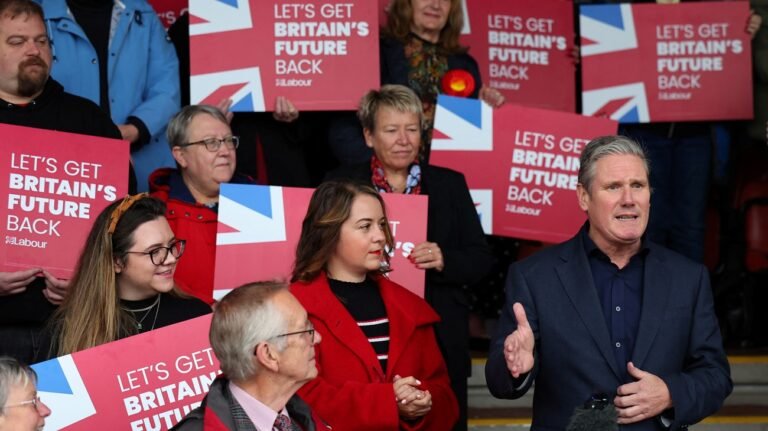
London, England – The British political scene awoke today to a resounding defeat for the ruling Labour Party, in what the Financial Times described as potentially the party’s worst performance in local elections in the 21st century. These disastrous results put Prime Minister Keir Starmer’s future in jeopardy. Meanwhile, Reform UK has seen a dramatic rise, successfully attracting a significant number of voters from the traditional base of both Labour and the Conservatives.
Seat bleeding and loss of control
As Friday dawned, the outlines of the collapse became clear. Initial results showed Labour losing nearly 200 seats and control of eight major local councils, including historic strongholds like Hartlepool, Tameside, Redditch, and Tamworth, as well as Wandsworth in the heart of London. In contrast, the Reform Party made early net gains of over 250 seats. This reflects a dramatic shift in the mood of the British electorate. Professor John Tonge of Liverpool University told the Financial Times: “Labour is steadily heading towards a historic low point not seen for decades, which calls into serious question the legitimacy of Starmer’s current leadership.”
Internal conflicts and the threat of overthrow
These heavy losses have triggered a wave of despair within the party, and whispers have turned into open questions about the viability of Starmer remaining in office. Despite denials from allies of Energy Secretary Ed Miliband that he had asked Starmer to set a timetable for his departure, the pressure is mounting as the party is projected to lose between 1,500 and 2,000 of the 5,000 seats up for grabs in 136 local councils.
A new political map and rising powers
The workers’ tragedy is not confined to England; further setbacks are expected in Wales and Scotland, with the Scottish National Party (SNP) and Plaid Cymru poised to gain ground.
Amid this decline, the Liberal Democrats and the Green Party have emerged as rising forces, seeking to penetrate working-class strongholds in major cities.
In England, the Reform Party made gains at the expense of the Conservatives in Brentwood and North East Lincolnshire, while the Conservatives, led by Keimy Paddock, suffered losses of roughly the same magnitude as Labour. Amid this tense atmosphere, Britain awaits the results of the coming hours, which could potentially bring down prominent political figures in Downing Street. Consequently, frustration and despair within the Labour Party are becoming a likely catalyst for a serious move aimed at ousting Starmer from the leadership.