Tel Aviv, Israel – In a dramatic development that could redraw the geopolitical map of the Middle East, the Hebrew-language newspaper Israel Hayom reported on Monday that Tehran has shown “unprecedented” flexibility regarding outstanding issues with the United States. These issues include its nuclear enrichment program and its regional influence. This comes ahead of crucial negotiations scheduled to be hosted by Pakistan under international auspices.
Enriched uranium: Agreement on delivery, disagreement on destination
The newspaper quoted three well-informed American and regional diplomatic sources as saying that Iran had agreed in principle to hand over its entire stockpile of enriched uranium. Despite this significant concession, the identity of the recipient remains a point of contention. Three options are currently on the table:
Russia: which has expressed full readiness to receive the shipments.
The International Atomic Energy Agency: which will have to provide secure storage and processing sites.
The United States: This is the option Washington is pushing for to ensure direct oversight. Tehran, however, has so far rejected this, insisting that Washington’s role be limited to monitoring through IAEA staff only.
Flexibility in “thorny issues”: Proxies and the Strait of Hormuz
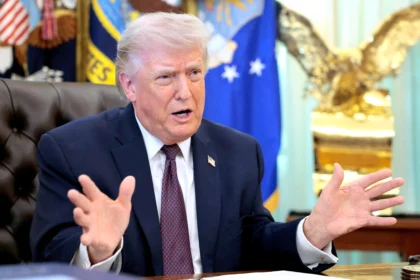
Reports indicate that this progress is the reason behind the optimistic tone recently adopted by US President Donald Trump. According to sources, Tehran has begun to adopt a more “realistic” approach to supporting its proxies in the region. It has proposed shifting support from military aid to “civilian assistance and reconstruction,” such as repairing the homes of Hezbollah members in Lebanon. This move is seen as a goodwill gesture aimed at de-escalation. Regarding the Strait of Hormuz, the world’s most vital shipping lane, Iran has expressed its willingness to refrain from imposing transit fees. This is contingent on a single condition: the lifting of US sanctions concurrently with the reopening of the strait. However, this demand faces fierce internal opposition from leaders of the Islamic Revolutionary Guard Corps (IRGC).
Economy versus concessions: $20 billion under scrutiny
In return, Washington offered to release approximately $20 billion as an initial installment of frozen Iranian assets, on the condition that it be allocated exclusively for civilian and humanitarian purposes.
However, this issue remains contentious. Tehran considers the amount “insufficient” and objects to strict oversight of how it will be spent.
Existing challenges and internal pressures
Despite this optimism, significant obstacles remain, most notably the ballistic missile program, on which the Iranian Revolutionary Guard Corps (IRGC) categorically refuses to discuss any technical or quantitative limitations. Washington officials attribute this Iranian flexibility to the severe depletion of foreign currency reserves and the worsening economic crisis and poverty within Iran. This has left the regime desperately in need of an economic lifeline. The newspaper concluded its report by noting that if the Pakistani negotiations are successful, the United States is expected to announce an extension of the current ceasefire to pave the way for finalizing the terms of the “grand bargain.”