New York, USA – A comprehensive report published by The Wall Street Journal on Saturday morning revealed a radical and dangerous shift in Iranian security doctrine. The report indicated that Tehran has adopted a comprehensive aggressive strategy aimed at igniting conflict throughout the Middle East. This comes in the wake of recent setbacks suffered by the regime.
From limited response to full-scale escalation
According to the report, the Iranian leadership—before the assassination of Supreme Leader Ali Khamenei—concluded that its policy of “limited response”
over the past two years had been a strategic error that left it exposed and vulnerable.
This new understanding was solidified following Operation “Am Kalavi” last June,
which left Iran’s air defense systems devastated. Its nuclear program was also brought to a standstill.
The newspaper reports that officials in Tehran now realize that a direct confrontation would inevitably lead to defeat.
Therefore, they have decided to shift to a model of “broad regional escalation,”
whereby the attack is not limited to the immediate enemy but extends to all countries in the region.
They are focusing particularly on the Gulf states and the global economy.”
Mosaic Defense: A Decentralized Command for Retaliation
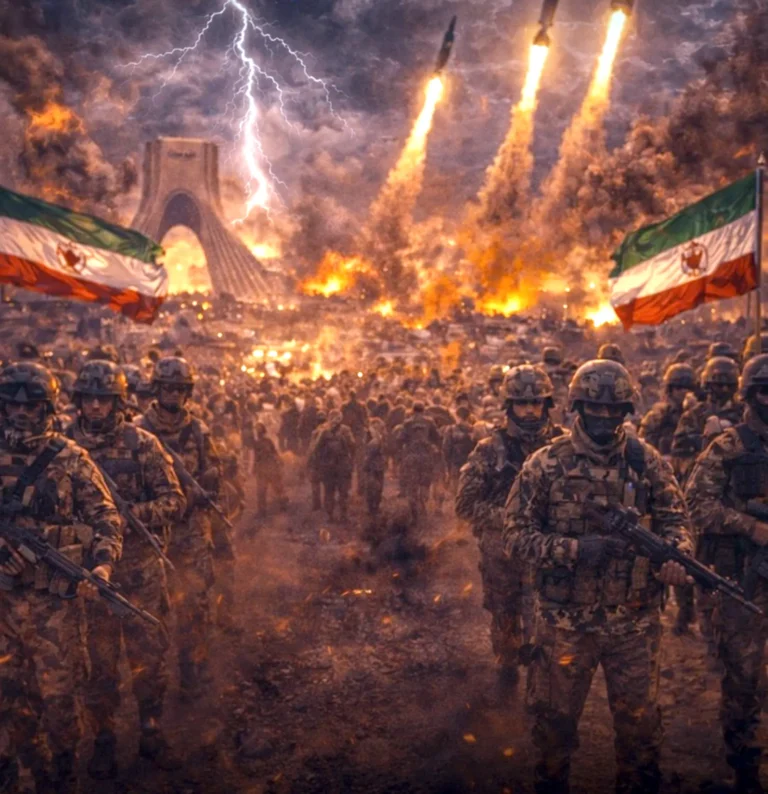
The report reveals a crucial element of the Iranian plan: the transformation of the military structure into what is termed a “mosaic defense.”
The Revolutionary Guard has divided the country into 31 independent command centers (according to the provinces),
with each commander authorized to lead a region in the fight.
Furthermore, each commander is empowered to launch missiles and automatically activate guerrilla forces
in the event of a loss of communication with the central command.
This strategy aims to ensure the continuation of attacks even after the elimination of top leadership.
This occurred this week with the assassination of Khamenei and other senior commanders.
Larijani’s message and the implementation of threats
The report confirms that Iran has made no secret of its intentions.
Ali Larijani, Secretary of the Supreme National Security Council, delivered a message to the United States via Oman stating
that Tehran would no longer retaliate in kind, but would instead escalate disproportionately.
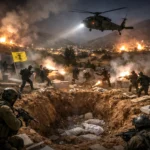
The consequences of this doctrine have manifested in recent days through
attacks targeting oil facilities in Saudi Arabia and the UAE.
These attacks have also included the bombing of global data centers and hotels in Dubai,
and have culminated in an attack on a military base in Cyprus—the first Iranian target on European soil.
Target: $150 per barrel of oil
Through this military escalation, Tehran aims to push global oil prices to $150 a barrel.
This is intended to create immense political pressure on the Trump administration before the midterm elections.
The report’s experts conclude that Iran’s goal is not “victory” in the traditional sense.
Rather, Iran seeks to convince the West that the cost of regime change is prohibitively high, under the slogan:
“Let everyone feel that the price is extremely high.”