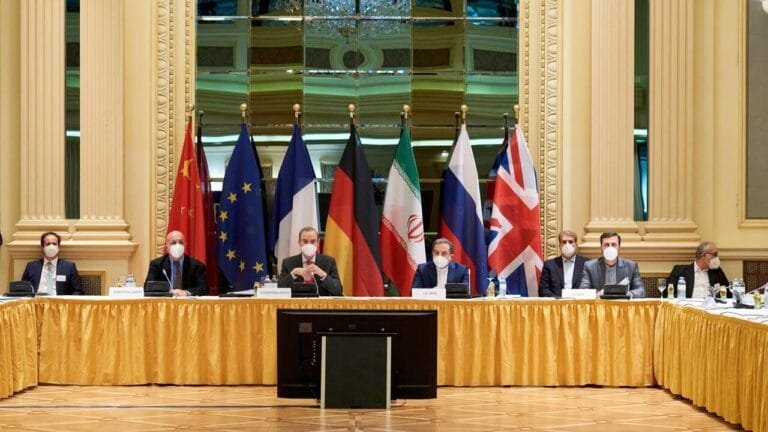
Geneva, Switzerland – A senior Iranian official said that reaching a framework for a nuclear agreement between Tehran and Washington is still possible, provided the United States separates “nuclear issues” from other matters. The official stressed the need to narrow the remaining gaps during the third round of talks currently underway in Geneva.
Talks resumed under Omani mediation.
Iranian Foreign Minister Abbas Araqchi and US envoys Steve Wittkopf and Jared Kushner resumed their indirect talks on Thursday, mediated by Oman, after a morning session was postponed, according to Iranian media reports.
Omani Foreign Minister Badr al-Busaidi described the discussions as involving an exchange of “creative and positive ideas,” expressing his hope for progress. The Iranian official confirmed that the talks were “intense and serious” and that some gaps still needed to be bridged.
Disagreement over the scope of negotiations
Tehran insists that negotiations focus solely on its nuclear program and the lifting of sanctions. Washington, however, seeks to broaden the scope of discussions to include Iran’s ballistic missile program and its support for armed groups in the region.
US Secretary of State Marco Rubio stated that Iran’s refusal to discuss its missile program is a “major problem” that must ultimately be addressed. He asserted that these missiles pose a threat to regional stability.
In response, Tehran reiterated its denial of seeking nuclear weapons, indicating its willingness to demonstrate “flexibility” in negotiations in exchange for the lifting of sanctions. It also affirmed its readiness to acknowledge its right to enrich uranium.
Military escalation and mutual pressure
The talks come amid escalating regional tensions, after US President Donald Trump warned of “serious consequences” if an agreement is not reached within a short timeframe. He reiterated his preference for a diplomatic solution but stated he would not allow Iran to acquire a nuclear weapon.
The region has seen a US military buildup, including the deployment of fighter jets and warships. Iran has previously retaliated against Israeli strikes with missile launches, raising fears of a wider conflict in the Middle East.
Internal pressures in Tehran
Domestically, Iranian Supreme Leader Ali Khamenei faces economic challenges and renewed protests amid ongoing sanctions. Iranian President Masoud Pezeshkian asserted that Khamenei issued a fatwa prohibiting weapons of mass destruction, considering this proof that Tehran is not seeking nuclear weapons.
Observers warn that the failure of the current round of talks could increase the likelihood of military escalation, while others believe that continued negotiations and the drafting of a framework agreement could pave the way for a potential settlement.