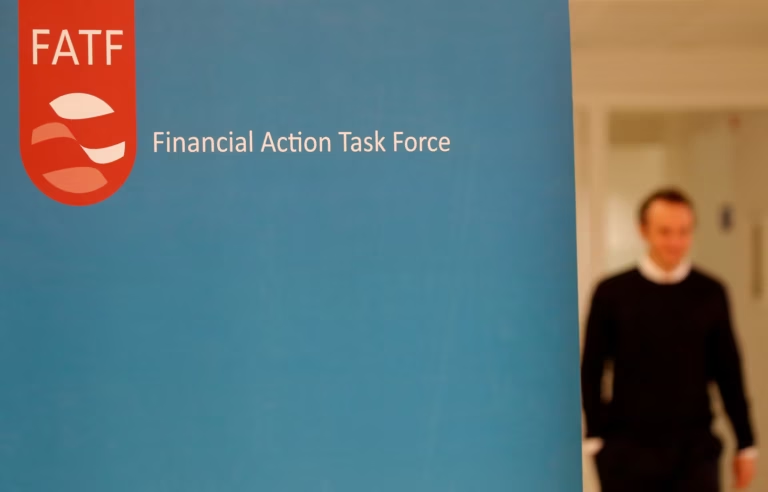
Paris, France – The Financial Action Task Force stated that the criminal use of informal money transfer networks has become a growing global problem, warning against the expanding use of these networks for money laundering and financing various criminal activities, and calling on governments and businesses to strengthen efforts to combat professional money laundering services.
Widespread Global Phenomenon
The Task Force explained in a report that the criminal use of non-banking settlement methods, including hawala and similar service providers, has become a “widespread global phenomenon,” as these systems rely on transferring payments through agents rather than regulated financial institutions. Previously used primarily to launder proceeds from crimes such as drug trafficking and smuggling, these networks are now also utilized to process funds generated from fraud, cybercrime, terrorism financing, illegal gambling, and transnational organized crime.
Professionals Facilitating Illicit Networks
FATF member countries involved in preparing the report stated that professional service providers are increasingly participating in facilitating these schemes, including lawyers, accountants, auditors, consultants, and real estate agents. The group noted that this development adds complexity to authorities’ efforts in tracking the movement of funds and identifying ultimate beneficiaries, especially with the expanding scope of services used to obscure sources of wealth.
Cryptocurrencies Heighten Obscurity
The report noted that encrypted communications, financial technology, and anonymity-enhancing tools, alongside the increasing use of cryptocurrencies and new technologies, have altered the nature of informal money transfer networks, making them faster, more obscure, and resilient. FATF added that underground banking and money laundering based on hawala networks and similar providers have become highly professionalized, with some networks operating like sophisticated corporations, mounting challenges for anti-money laundering and counter-terrorism financing authorities.