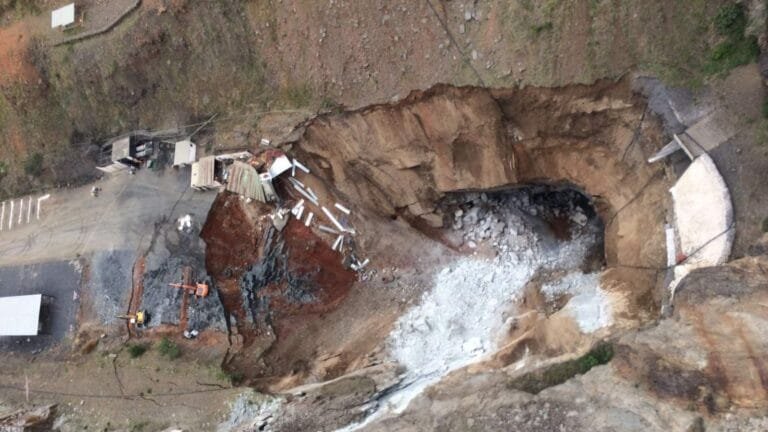
Bangui, Central African Republic — At least 100 workers were killed following a sudden landslide at an artisanal gold mine in the Zambouille region, near the border with Cameroon. Consequently, the catastrophic collapse has devastated local mining communities across the area. Furthermore, emergency responders and volunteer residents continue search and rescue efforts to reach workers trapped beneath heavy debris.
Collapse Details and Search Efforts
The disaster occurred at an informal mining site located approximately 50 kilometers from the city of Baboua, where numerous miners were working inside underground shafts. Additionally, local rescue teams have recovered dozens of bodies, with authorities warning that the death toll may increase due to delayed access to collapsed tunnels and diminishing hopes of finding survivors.
Rescue operations face severe logistical hurdles and a lack of heavy machinery needed to clear massive earth volume. Consequently, recovery workers are relying largely on manual tools and community-driven clearing initiatives.
Artisanal Mining Hazards and Recurrent Disasters
The Central African Republic possesses vast mineral deposits and gold reserves, yet its informal mining sector suffers from minimal safety enforcement and regulatory oversight. Additionally, similar shaft collapses occur frequently across border mining zones, posing severe risks to local workers operating in unsafe conditions.
Finally, the tragedy highlights the critical necessity for structural reforms and safety enforcement across informal mineral extraction sites. Ultimately, local authorities remain on site as rescue teams work to finalize casualty counts.