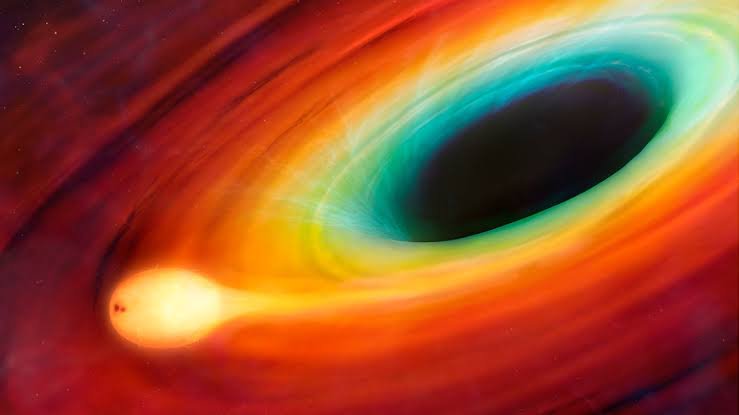
Washington, United States — Astronomers have discovered the fastest known star orbiting Sagittarius A*, the supermassive black hole at the center of the Milky Way galaxy. Consequently, the landmark discovery provides scientists with a unique opportunity to measure the spin rate of the galactic center for the first time. Furthermore, tracking the star’s trajectory offers an unprecedented testing ground for gravitational dynamics and general relativity under extreme conditions.
Stellar Characteristics of S301 and Orbital Mechanics
Designated as “S301,” the newly identified star possesses a mass approximately 50% greater than that of the Sun and radiates nearly five times its luminosity. Additionally, S301 accelerates to a staggering speed of 90 million kilometers per hour as it moves along its highly elliptical 8.7-year orbit. Consequently, at its closest approach (periastron), the star passes within just 11.5 astronomical units (AU) of Sagittarius A*—slightly further than Saturn’s distance from the Sun.
Dr. Stefan Gillessen, an astrophysicist at the Max Planck Institute and co-lead author of the study published in Nature, confirmed that S301 faces no immediate risk of consumption by the black hole. Additionally, the star’s apastron reaches approximately 1,360 AU, allowing it to maintain a stable yet gravitationally precessing path over time.
Observational Techniques and Black Hole Physics
Researchers utilized the Very Large Telescope Interferometer (VLTI) at the European Southern Observatory (ESO) in Chile to trace S301’s velocity and position. Additionally, Sagittarius A*, located roughly 26,000 light-years from Earth with a mass 4 million times that of the Sun, serves as a natural laboratory for cosmic physics.
Finally, the discovery of star S301 marks a significant leap in understanding the physical properties and evolutionary mechanics of supermassive black holes. Ultimately, ongoing observations of its orbit will enable astrophysicists to quantify the spin and spacetime curvature surrounding the Milky Way’s core.