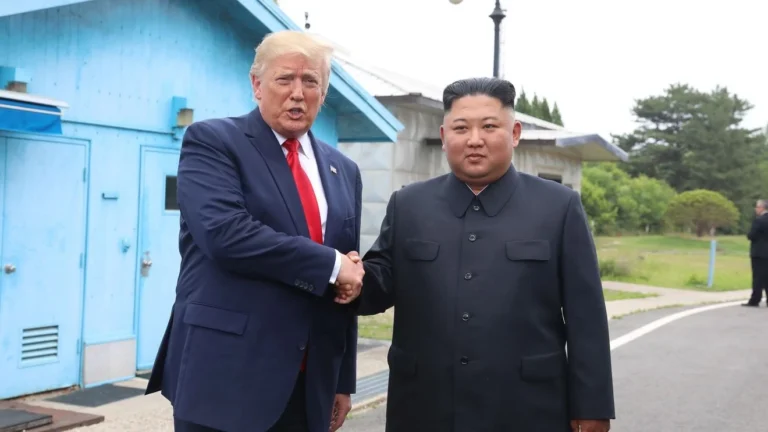
Washington, United States — U.S. President Donald Trump declared his intention to meet with North Korean leader Kim Jong Un later this year, stating that Pyongyang possesses 57 “very powerful” nuclear weapons. Consequently, the administration ordered the Pentagon to substantially scale back joint military exercises with South Korea to reduce regional tensions. Furthermore, Trump underscored that direct personal diplomacy remains the most effective approach to managing nuclear security risks in the Korean Peninsula.
Reduction of Joint Military Drills and Diplomatic Signaling
Speaking to reporters at the White House, Trump highlighted his working relationship with Kim Jong Un, arguing that sustained dialogue safeguards international stability. Additionally, coverage from L’Orient Today indicated that Trump instructed Defense Secretary Pete Hegseth to curtail joint drills, criticizing them as costly and inappropriately hostile toward Pyongyang. Consequently, the decision marks a strategic pivot toward reviving direct bilateral communications.
The development recalls the historic summits between the two leaders from 2018 to 2019 across Singapore, Hanoi, and the Demilitarized Zone. Additionally, reporting by The Japan Times noted that the reduction in military maneuvers coincided with broader foreign policy adjustments regarding allied burden-sharing.
Nuclear Stockpile Estimates and Diplomatic Outlook
Trump detailed his assessment of North Korea’s nuclear inventory, stating that Pyongyang holds 57 assembled weapons, while asserting that earlier policy decisions allowed the expansion to occur. Furthermore, his figures align with estimates from independent monitoring bodies, such as the Stockholm International Peace Research Institute (SIPRI), which estimated Pyongyang’s arsenal at approximately 60 warheads alongside additional fissile material reserves.
Finally, Trump’s announcement signals a potential reset in Washington’s diplomatic approach toward Pyongyang. Ultimately, regional allies in Seoul and East Asia continue to monitor diplomatic signals and potential summit logistics.