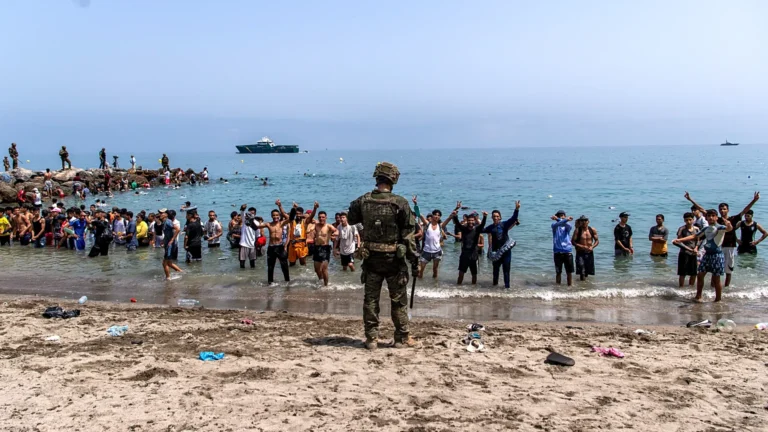
Rome – Italian Prime Minister Giorgia Meloni declared that recent developments surrounding the Ceuta crisis underscore Europe’s urgent need to reinforce its external borders and implement stricter measures against irregular migration. Consequently, she urged European nations to adopt a cohesive framework aimed at curbing uncoordinated arrivals and dismantling human trafficking networks.
Furthermore, Meloni emphasized that securing external borders does not imply abandoning humanitarian or legal obligations, but rather establishing an organized system for processing entries. As a result, such measures aim to eliminate perimeter vulnerabilities along key contact zones like the Spanish enclave of Ceuta.
Mediterranean Partnerships and Shared Responsibility
On the other hand, the Italian government reiterated its push for expanded operational partnerships with Southern Mediterranean origin and transit countries to improve border surveillance and streamline deportation procedures for ineligible arrivals. Additionally, Rome continues advocating for accelerated asylum processing and stricter enforcement mechanisms across member states.
Consequently, renewed friction at Ceuta highlights broader divisions within the European Union regarding burden-sharing and asylum management. Ultimately, Meloni stressed that securing borders remains a collective European responsibility rather than a burden left solely to frontline border nations.
Finally, the situation in Ceuta refocused European political debate on border security and migration reform. Ultimately, strong regional partnerships and unified policy enforcement remain critical to maintaining border integrity and managing migration flows effectively.