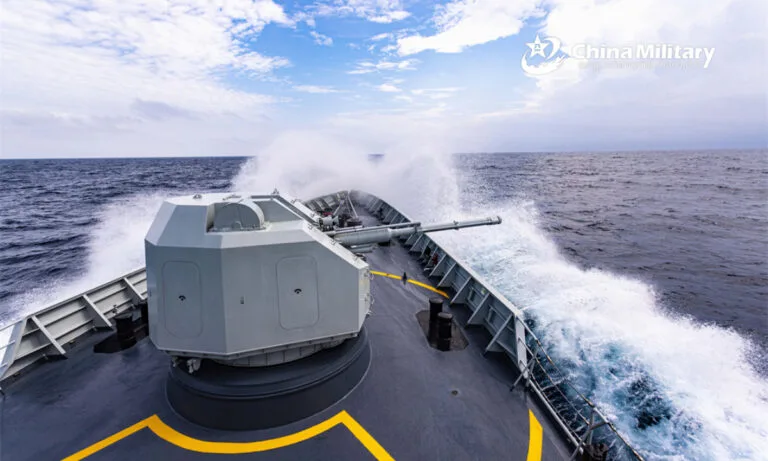
Hong Kong, China – Chinese military forces announced new air and naval patrols. These routine patrols occurred in the contested South China Sea. Beijing directly accused Philippine authorities of undermining regional peace. These security developments unfold amid rising tensions in this corridor. Observers warn about the consequences of this military escalation.
Beijing Confirms the Continuation of Routine Military Operations
The Southern Theater Command explained the details of these exercises. Naval and air forces executed intense reconnaissance and interception missions. Chinese officials confirmed continuous close monitoring of field developments. These military measures aim to protect national interests and sovereignty. China considers these patrols part of its standard security duties.
The Chinese government insists on asserting full sovereignty over territories. Armed forces prepare to handle any potential security threats. Beijing affirms its complete readiness to respond firmly to violations. Military experts believe these patrols send clear force projection signals.
Explicit Accusations Against the Philippines Regarding Foreign Allies
The Southern Command spokesman launched sharp criticism against Manila. Beijing criticized the Philippines for organizing joint patrols with foreigners. China views these maritime activities as steps to disrupt stability. The spokesman confirmed Chinese forces will defend their maritime rights. Beijing rejects Philippine efforts to build foreign military coalitions there.
Chinese officials believe joint patrols increase field collision risks. Beijing emphasizes its rejection of external interference in regional affairs. The Chinese government urges neighboring states to stick to dialogue.
A Longstanding Historical Dispute Over the Vital Waterway
China claims sovereignty over most parts of the sea. These sweeping claims face strong objections from Asian neighbors. Beijing rejects the 2016 international arbitral tribunal ruling completely. The international ruling rejected the legal basis of Chinese claims.
The South China Sea remains a critical global trade corridor. Hundreds of commercial vessels cross these strategic waters daily. Neighboring countries fear complete Chinese control over maritime routes. Global powers seek to protect freedom of navigation and trade.
Prospects for De-escalation and Peaceful Conflict Resolution
Regional stability requires all parties to exercise immediate restraint. The international community calls for active direct diplomatic communication. Regional powers aim to reduce sudden military collision risks. Peaceful negotiation remains the optimal path to resolve disputes.