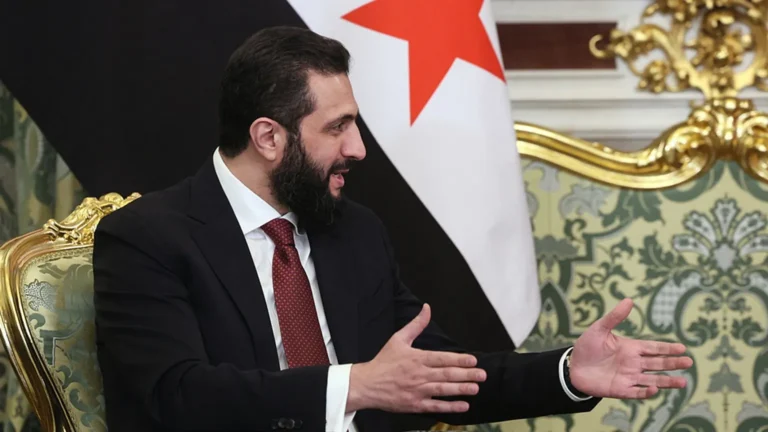
Damascus, Syria – Syrian President Ahmed al-Sharaa issued a series of decrees that included appointments to high-ranking leadership positions. These appointments involved a redistribution of responsibilities within the country’s security and administrative apparatus.
High-ranking security and intelligence appointments
The Syrian Arab News Agency (SANA) reported today the appointment of Major General Abdul Qader Tahan as head of the General Intelligence Directorate, replacing Hussein Salameh. This move comes as part of a comprehensive restructuring of leadership positions. Hussein Salameh has been appointed head of the National Security Bureau. The reshuffle also included several other prominent appointments: Anas Khattab as Director of the National Security Bureau while retaining his position as Minister of the Interior; Hussein Salameh as Deputy Director of the National Security Bureau; and Mulham Shantout as Deputy Minister of the Interior for Security Affairs.
The journey of Abdul Qader Tahan
Major General Abdul Qader Tahan is a highly qualified security and military figure who emerged during the years of conflict in Syria. He has accumulated extensive experience in both field operations and administration. Prior to assuming the presidency of the General Intelligence Directorate, Tahan served as Deputy Minister of the Interior, a position to which he was appointed by presidential decree in February 2016. His current promotion places sensitive security files on his shoulders at a critical juncture for Syrian national institutions.
Redistribution of responsibilities
According to observers and informed sources, these changes aim to enhance security efficiency and redistribute powers and responsibilities within the Syrian security apparatus. These decisions come within the context of the Syrian state’s drive to modernize and develop the performance of its security and administrative institutions. This is intended to ensure the stability of security operations and their adaptation to current field and political developments. The Syrian leadership has emphasized the continuity of institutional work through the exchange of expertise among security leaders who have held various positions in recent periods.
These steps indicate a new stage in the management of Syrian security files. The Syrian leadership relies on integrating field military expertise with administrative and intelligence roles. This is to ensure the cohesion of the security system in the face of internal and external challenges.