Manama, Bahrain – The Arabian Gulf region is experiencing an unprecedented state of military alert following a night of tit-for-tat strikes. These strikes have broadened the scope of the conflict to include US bases and vital installations in neighboring countries.
Bahrain announces it has thwarted air attacks
The Bahrain Defense Force General Command announced on Thursday morning that the Kingdom’s air defense systems successfully intercepted and destroyed several Iranian aerial attacks. Manama condemned Tehran’s “systematic hostile approach,” asserting that these missile and drone attacks targeted civilians and private property. It also deemed them a blatant violation of international humanitarian law.
Revolutionary Guard targets US bases
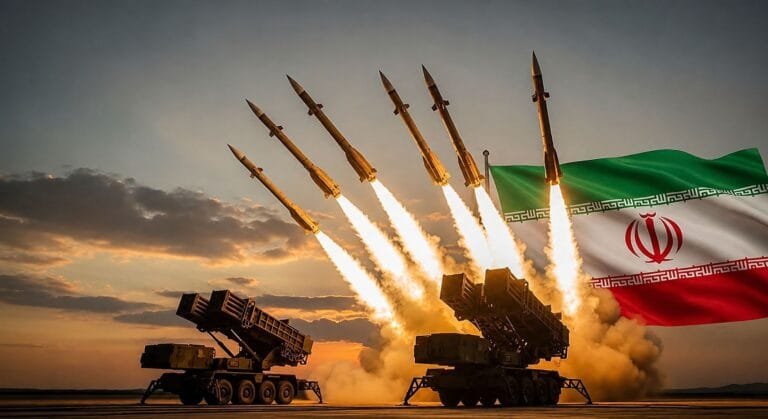
Simultaneously, the Iranian Revolutionary Guard announced an attack it described as a “joint operation” against four strategic US military bases in the region. According to a statement broadcast by Press TV, Iranian naval and aerospace forces targeted the Arifjan and Ali Al Salem bases in Kuwait. Additionally, the Juffair and Sheikh Isa bases in Bahrain were also targeted. The Iranian military vowed to escalate its operations if what it called “American aggression” continued.
The United States responds with 90 goals
In response, the United States launched a large-scale airstrike on Thursday evening targeting military sites deep inside Iran. US Central Command (CENTCOM) reported striking approximately 90 critical military targets to degrade Iran’s offensive capabilities.
Local reports indicated powerful explosions in several cities and strategic locations, including Bandar Abbas, Konarak, Sirik, Jask, Iranshahr, Akala, and Chabahar, as well as Abu Musa Island in the Persian Gulf.
These strikes resulted in at least two deaths, according to initial reports. The US operations focused on destroying logistical infrastructure, missile depots, and drone launch sites used by Tehran in its operations.
These developments place the region at a dangerous crossroads, as the confrontation has escalated from limited incidents to open military conflict affecting military bases and the national sovereignty of Gulf states.
These developments come at a time when the international community is awaiting the stance of global powers regarding this escalation, which threatens the stability of international waterways and global energy security. Meanwhile, Washington maintains that these operations are a necessary and direct response to Tehran’s growing threats.