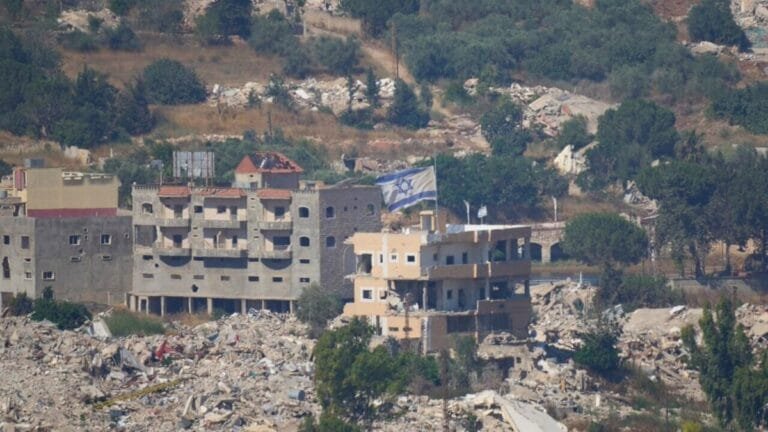
Beirut, Lebanon – In a development on the ground that could jeopardize the fragile diplomatic understandings, Israel announced on Sunday the destruction of an underground tunnel it claimed belonged to Hezbollah in southern Lebanon. The announcement came in a joint statement by Prime Minister Benjamin Netanyahu and Defense Minister Israel Katz. The statement emphasized that the operation was carried out “after informing the United States in advance.”
Details of the operation and the Israeli army’s position
According to the Israeli statement, the army targeted a tunnel extending over 200 meters in length and more than 25 meters in depth. The statement claimed the tunnel contained hundreds of weapons and launch sites intended for targeting towns in northern Israel. Furthermore, the statement affirmed that Israeli forces would remain in what it termed the “security zone” in southern Lebanon. This indicates the continuation of operations to destroy Hezbollah infrastructure, despite the existence of a ceasefire framework agreement.
Diplomatic repercussions and international pressure
This move comes at a sensitive time, as the Lebanese side seeks to solidify the agreement. Lebanese President Joseph Aoun spoke by phone with his American counterpart, Donald Trump, on Saturday. During the call, he urged Washington to pressure Israel to prevent violations and ensure its withdrawal from Lebanese territory. For his part, Trump affirmed Washington’s support for the implementation of the framework agreement.
The Lebanese file today comes within two complex diplomatic tracks: The first is related to the memorandum of understanding between Washington and Tehran, which aims to calm the fronts. The second is based on the “tripartite framework” (American-Lebanese-Israeli) for security arrangements in southern Lebanon.
The risks of a “fragile agreement”
According to Axios, citing informed sources, the negotiations preceding the agreement were marked by sharp disagreements and intense American pressure. The central objective was to curtail the influence of Iran and Hezbollah. However, the recent US-Iranian understandings—which included the establishment of a “joint de-escalation mechanism” also involving Qatari and Pakistani mediators—were met with displeasure in Tel Aviv and Beirut. In these cities, some fear that this mechanism will grant Tehran a greater role in Lebanese affairs.
These developments on the ground are putting the “tripartite framework” to a real test. While Washington is trying to maintain control, observers fear that continued Israeli operations could provoke a violent response from Hezbollah. This could undermine the diplomatic understandings and plunge Lebanon back into a cycle of internal conflict. Questions are being raised about whether this agreement can hold as a lasting peace, or is merely a temporary truce in a region rife with turmoil.