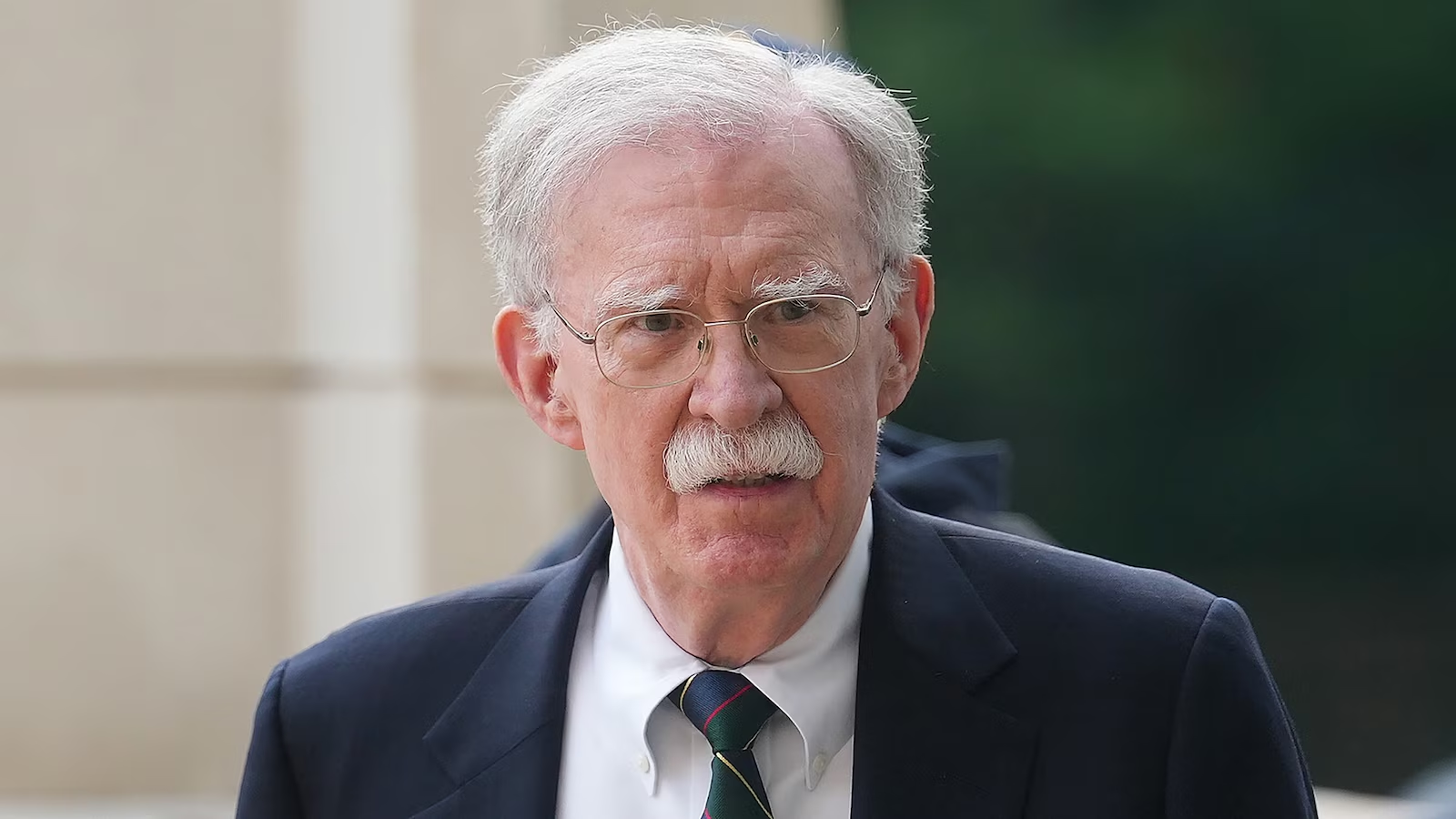
Washington, United States – In a surprising development that places the “classified documents” saga back at the forefront of the American political landscape, former U.S. National Security Advisor John Bolton has acknowledged his responsibility for possessing documents classified as secret without the necessary security clearances. This admission marks a new chapter in the series of cases involving former U.S. officials and the protocols governing the handling of sensitive government information.
An Admission Opening the Door for Accountability
Bolton’s admission of responsibility came within the context of investigations focusing on how government-protected documents were stored and handled after he left his official post. Although the nature of these documents and their potential impact on national security remain undisclosed, the mere admission of possessing them without authorization constitutes a serious breach under strict U.S. legal standards governing classified information.
Potential Legal Repercussions
Bolton now faces the possibility of judicial proceedings aimed at determining the nature and scope of the violation. Such cases are subject to federal laws that impose severe penalties on anyone who removes or retains security-related information outside of authorized and designated channels. Legal circles in Washington are awaiting the next steps to determine whether this admission will lead to a judicial settlement or a prolonged legal battle, as the outcome hinges on the circumstances of the retention and whether there was any intent to conceal the materials.
The Classified Documents File: A Persistent Headache for Authorities
This development reflects a state of political and legal tension in the United States surrounding the handling of classified government documents, where the management of sensitive information has become a benchmark for officials’ credibility. Similar cases involving high-ranking political figures have recently increased public and regulatory pressure to ensure that laws are applied fairly and equally.
As investigations continue, John Bolton finds himself in a defensive position that could alter his public standing, casting doubt on his commitment to the security protocols he once championed as the nation’s top security official.