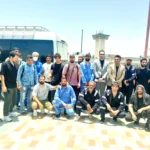
Riyadh, Saudi Arabia – The Secretary –General of the Gulf Cooperation Council welcomed the Sultanate of Oman’s plan to evacuate more than 11,000 sailors stranded in the Strait of Hormuz,
stressing the Council support for efforts aimed at protecting lives and ensuring safe navigation in one of the most important global sea lanes.
He also denounced Iranian threats to freedom of navigation in the strait.
He called for respecting international law and maintaining the security of maritime trade lines.
Welcoming Omani efforts
The Secretary-General commended the initiative launched by the Sultanate of Oman
to evacuate thousands of sailors stranded in the Strait of Hormuz,
considering it a reflection of its humanitarian role and regional efforts to contain the repercussions of security tensions in the region.
He affirmed that this step contributes to protecting those working in the maritime transport sector.
It also helps mitigate the risks faced by ships and maritime crews in light of recent security developments.
Condemnation of threats to navigation
The Secretary-General expressed his condemnation of Iranian threats targeting freedom of navigation in the Strait of Hormuz.
He stressed that the security of maritime routes is a shared international responsibility,
and that any threat to shipping negatively impacts global trade and the stability of energy markets.
He called for adherence to international law and emphasized the need to guarantee the freedom
and smooth flow of navigation to safeguard the security of the region and the international community.
Calls to strengthen stability
The Gulf stance comes at a time of increasing regional and international efforts to secure navigation in the Strait of Hormuz,
amid concerns about the impact of any escalation on global trade and energy supplies.
The Secretary-General stressed the importance of continued coordination between countries in the region
and international partners to support maritime security and reduce tensions.
He emphasized the need to provide the necessary conditions for the safe passage of ships,
thereby maintaining the stability of the global economy and the security of vital maritime routes.