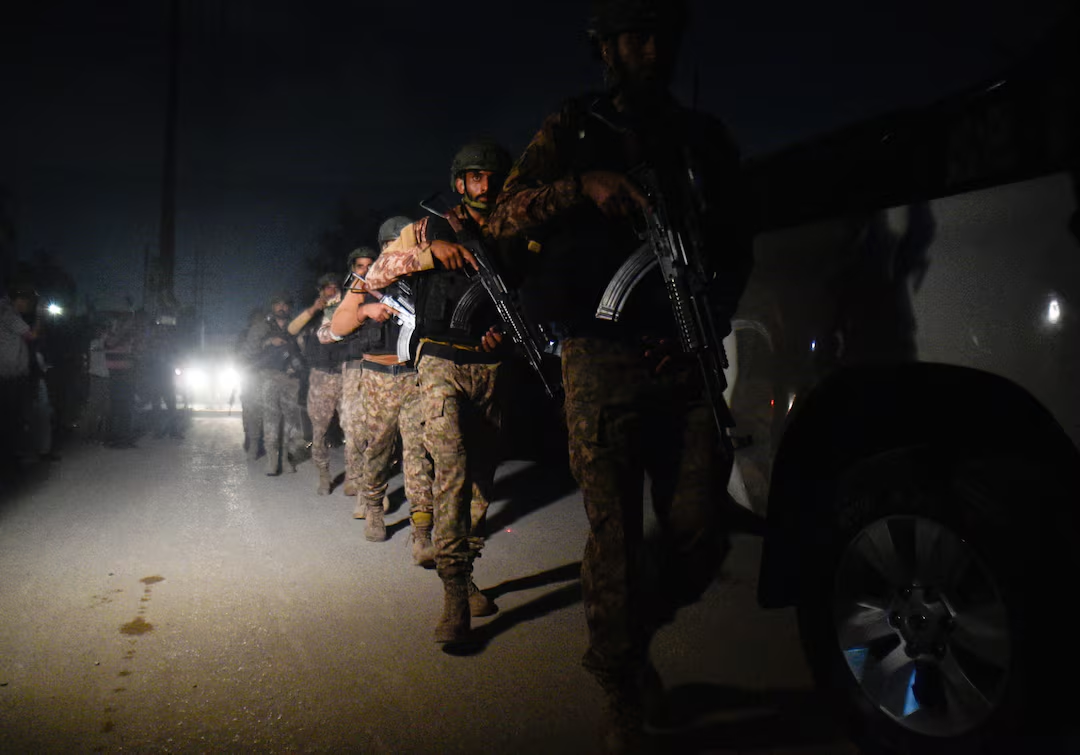
Karachi, Pakistan’s financial hub, witnessed an attack today, Saturday, targeting a headquarters of the paramilitary “Rangers” force, resulting in the death of three security personnel amidst a high-alert security situation in a city that had enjoyed relative stability in recent years.
Details of the Surprise Attack
The attack began early Saturday morning, with local reports detailing a powerful explosion followed by heavy gunfire on a main road in the Gulistan-e-Johar neighborhood, a vital area housing educational institutions and public facilities.
Sindh Police Inspector General, Javed Alam Odho, stated that the attackers used a vehicle to breach the main gate of the headquarters, indicating premeditated planning for the infiltration. The clashes resulted in the death of three attackers, while security forces continue combing operations and pursuit in the vicinity of the targeted area to fully secure the site.
Wide-Scale Security Alert and Sweeping Operations
Elite units from the Special Security Unit (SSU) and the Counter-Terrorism Force (ATF), supported by the Rangers, quickly cordoned off the area and closed approach roads. Police commandos and rapid response forces were deployed to control the situation and prevent the clashes from spreading.
The Rangers are a paramilitary force under the Ministry of Interior, operating in close coordination with the Pakistan Army, and are tasked with sensitive internal security missions, including combating organized crime and terrorist threats.
Alarming Indicators and Security Concerns
This attack is a notable and rare event in Karachi, which has seen tangible security improvements recently. Observers believe the incident may be linked to rising militancy in border regions with Afghanistan and attempts to shift the security confrontation to the heart of major urban centers.
The operation raises serious questions about the ability of armed groups to penetrate security fortifications in major cities. As security agencies continue to dismantle the leads of the attack, analysts fear this incident may signal a new phase of security confrontation, requiring a stricter defensive strategy to protect vital centers from armed infiltration.