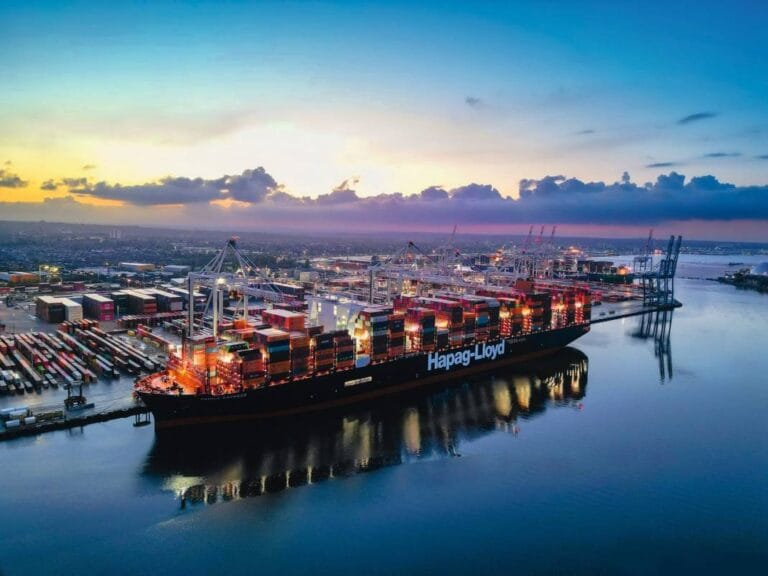
Berlin, Germany – The German maritime shipping company Hapag-Lloyd announced the evacuation of all its commercial vessels from the Arabian Gulf region. This strategic step came after conducting an accurate security assessment of the current regional situations. The company clarified that this procedure was done in continuous consultation with relevant authorities to ensure navigation security and avoid any potential risks.
Safe Departure for Stranded Vessels
An official spokesperson for Hapag-Lloyd stated that all vessels affected by the temporary closure of the Strait of Hormuz managed to exit safely. These ships were waiting inside the Gulf waters until the security situation stabilized to secure their routes and direct them toward safer maritime corridors.
The spokesperson added that the maritime evacuation process was executed after close coordination with competent authorities and careful monitoring of developments. The company confirmed its success in taking all precautionary measures that ensure the safety of maritime crews and the fleet to avoid any negative repercussions.
Secrecy Regarding New Navigation Routes
The German company refused to disclose any additional details regarding the current destinations of its ships or the alternative routes they will take. The spokesperson justified this discretion with pure security necessities aimed at protecting the course of maritime operations from any threats under the current circumstances.
This approach aligns with the strict policies adopted by major global shipping companies to maintain the confidentiality of movements. These companies implement rigorous precautionary protocols when dealing with sensitive geopolitical areas that may witness fluctuations affecting the movement of trade.
Cautious Anticipation in the Strait of Hormuz
Hapag-Lloyd’s movements coincide with a gradual resumption of navigational activity in the Strait of Hormuz after a wave of regional tensions. Those disruptions have significantly impacted supply chains and the movement of commercial ships and oil tankers in this vital region.
The strait is classified as one of the most important maritime arteries globally for the passage of a massive percentage of energy and gas exports to various continents. This explains the extreme attention paid by international energy markets and shipping companies to any stability or security breach that occurs in it.
Maritime transport institutions continue to impose strict monitoring on the developments of the security scene in the Gulf waters periodically. These entities seek to apply the highest standards of precaution to ensure the continuous flow of global trade and spare their crews any dangers that might hinder their journey.