Amman, Jordan – In a strategic move to bolster energy security and add value to the national economy, Jordan announced on Thursday that it possesses proven uranium reserves estimated at approximately 42,000 tons. The Jordan Atomic Energy Commission confirmed that these substantial quantities are sufficient to meet the Kingdom’s nuclear energy needs for up to 80 years. This positions Jordan prominently on the regional nuclear energy map.
Increasing economic viability
In a press briefing, the Chairman of the Jordan Atomic Energy Commission, Dr. Khaled Toukan, explained that Jordan is moving steadily towards investing in this natural resource. This comes especially in light of global shifts in energy markets. Toukan pointed out that uranium prices have witnessed record jumps in global markets, rising from $18 per pound four years ago to approximately $86 currently. Therefore, this significantly enhances the economic viability of mining and extraction projects in Jordan.
Expanding the production of “yellowcake”
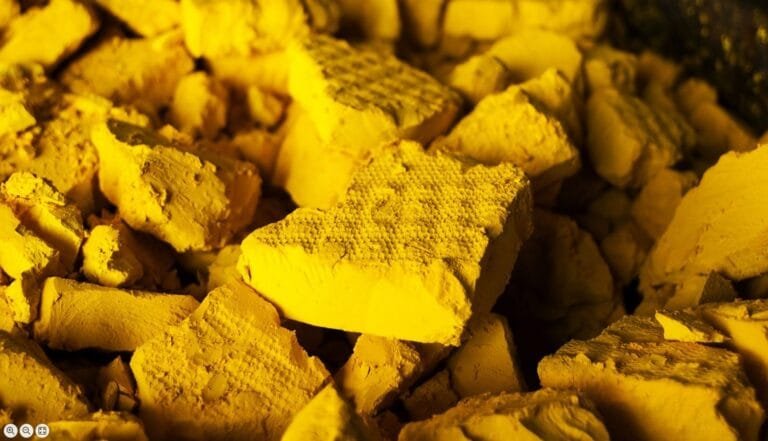
Regarding production operations, Toukan revealed that the Kingdom has successfully processed 1,500 tons of uranium ore to date, producing 150 kilograms of yellowcake (concentrated uranium powder).
He affirmed that future plans are ambitious, with the Commission aiming to reach production rates of 500 tons annually.
Toukan emphasized that Jordan’s strategy is not limited to producing and selling yellowcake as a raw material, but extends to achieving added value through advanced strategic partnerships.
Nuclear technologies and power reactors
The commission’s vision wasn’t limited to raw material extraction. Toukan revealed Jordan’s intention to enter advanced nuclear technology fields, most notably neutron insertion technology, which will directly support the semiconductor industry. As a result, this opens new industrial and technological horizons for the Kingdom.
He also announced a strategic plan to build nuclear power plants, explaining that they would provide a stable and low-cost energy source for up to 80 years of operation.
This represents a fundamental shift in Jordan’s energy policy. Jordan aims to reduce its reliance on imported energy sources, depending on its national resources and peaceful nuclear technologies to ensure sustainable development for future generations.