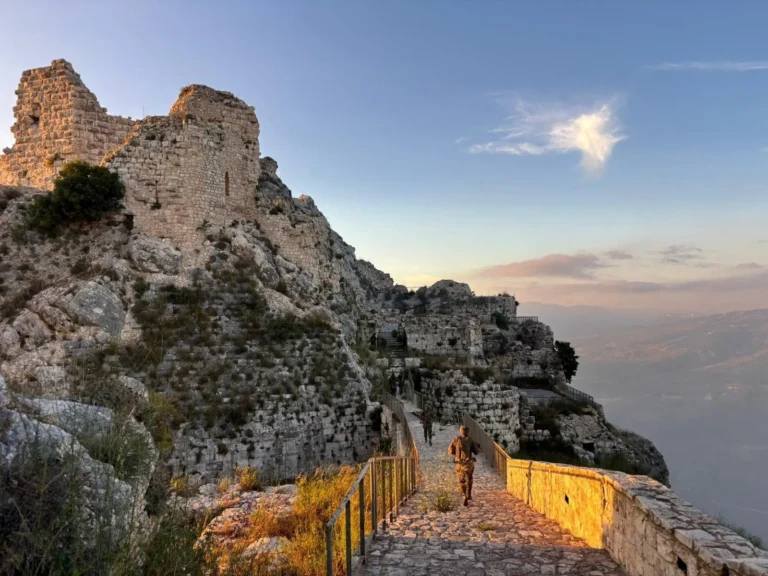
Paris, France – France has officially requested an emergency meeting of the UN Security Council to discuss the rapidly evolving situation on the Lebanese front. This French initiative follows the Israeli forces’ capture of the historic medieval Beaufort Castle (Qalaat al-Shaqif) in southern Lebanon, a development of significant strategic and symbolic importance.
In a press statement to BFMTV, French Foreign Minister Jean-Noël Barrot confirmed that Paris could no longer remain silent in the face of the deteriorating situation on the ground.
Barrot said, “I have requested an emergency meeting of the UN Security Council because I believe the time has come to put an end to the ongoing military operations.”
France: “Nothing justifies occupation”
Although the French minister acknowledged Israel’s right to self-defense, a right guaranteed to all nations, he stressed that this right does not give it carte blanche to violate Lebanese sovereignty.
Baroux added firmly, “Nothing justifies the continuation of Israeli military operations in Lebanon, nor its increasing occupation of Lebanese territory.”
The capture of Beaufort Castle, a strategically important vantage point, is seen as an indication of the expansion of the Israeli ground incursion. This development prompted Paris to take urgent diplomatic action.
France aims, through this meeting, to garner international pressure to curb the escalation. It also warns that the continued “increasing occupation” of Lebanese territory threatens to push the region toward a full-scale war with unpredictable consequences.
Growing international pressure
The French move comes at a time when the United Nations is divided on how to handle Middle East issues. Nevertheless, the French position places the Security Council squarely before its direct responsibilities to protect the sovereignty of member states.
The emergency meeting is expected to focus on the need to adhere to international law. It also seeks to put an end to the ground incursions that are altering the military landscape of southern Lebanon, amid fears that historical fortresses and strategic sites could be transformed into military strongholds, further complicating the situation on the ground.