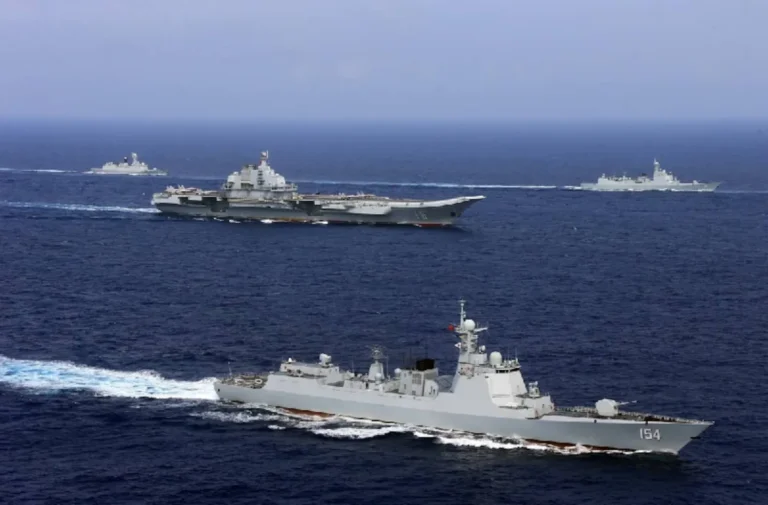
Beijing, China – China has accused a Dutch frigate of carrying out what it called “provocative actions” in waters and airspace near the South China Sea. This marks a new escalation reflecting growing tensions between Beijing and some European countries over freedom of navigation and military movements in the region.
The Chinese Ministry of Defense stated that the Dutch frigate entered areas that Beijing considers sensitive to security. It confirmed that Chinese forces closely monitored the ship’s movements and took necessary measures to track and warn it. This was done in accordance with international law and what it described as “protecting national sovereignty.”
The ministry added that the Dutch vessel also conducted maneuvers involving military helicopters and reconnaissance aircraft. It deemed these activities a threat to regional stability and an increase in the likelihood of unintended military clashes.
In contrast, the Dutch Ministry of Defense asserted that the frigate was carrying out a routine maritime mission within the framework of international freedom of navigation. It also indicated that its movements were conducted in accordance with internationally recognized maritime law. The ministry stated that the vessel did not violate any national sovereignty.
This tension comes at a time of escalating international military activity in the South China Sea. Several Western countries continue to send warships to the region to assert freedom of navigation. China, however, views these movements as attempts to exert political and military pressure and provoke it.
The South China Sea is one of the world’s most volatile regions due to complex territorial disputes. China claims sovereignty over vast swathes of the sea, while other countries, such as the Philippines, Vietnam, and Malaysia, contest these claims.
Observers believe that the increased Western military presence in the region reflects growing international concern about China’s expanding influence in Asia and the Pacific, particularly given the escalating strategic competition between Beijing and the United States and its European allies.