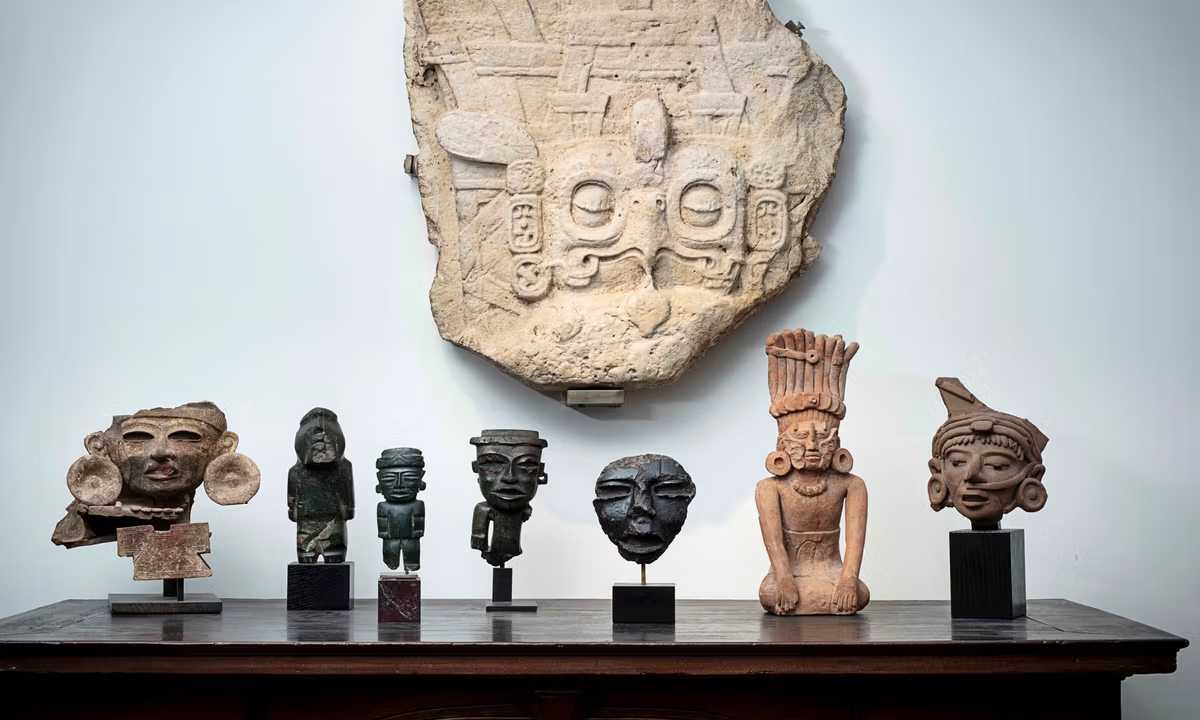
Guatemala City, Central America – The government of Guatemala has officially demanded the return of a rare, 1,200-year-old archaeological stone lintel after it was mistakenly sent to neighboring Mexico as part of a shipment of recovered antiquities believed to belong to Mexican heritage. This incident has reignited widespread debate over the protection of cultural property in the region.
Guatemalan cultural authorities explained that the artifact bears unique hieroglyphic inscriptions, carvings, and symbols dating back to the height of the ancient Maya civilization. Moreover, it is considered a piece of exceptional historical value due to its vital role in documenting and understanding previously obscure religious, social, and political aspects of that era.
Coordination Error Leads to Misplacement and Prompt Diplomatic Response
Official agencies stated that the erroneous repatriation occurred during logistical coordination between heritage authorities in both nations. This led to the piece being grouped and transported to Mexico instead of being held and routed back to its homeland. Authorities noted that official high-level diplomatic communication has already begun to arrange the reverse transit and retrieve the object as soon as possible.
Guatemala’s Ministry of Culture and Sports emphasized that recovering this stone lintel represents an absolute national priority, as it forms an inseparable part of the historical identity and cultural heritage of the Mayan people. In addition, the ministry called for strengthening inspection mechanisms and regional cooperation to prevent similar technical errors in handling and transferring repatriated antiquities.
Escalating Global Debate Over the Repatriation of Antiquities to Their Origin Countries
This incident coincides with a visible escalation in global diplomatic and legal debates regarding the repatriation of artifacts and masterpieces to their countries of origin. This is especially relevant for those that left their homelands during colonial periods, through international smuggling networks, or via inaccurate documentation and transport processes.
Archaeological experts in Central America believe that opening this file could prompt a comprehensive review and audit of antiquities stored within regional museums. This would help ensure the historical rights of each nation are preserved and safeguard their human legacy from loss or misattribution.