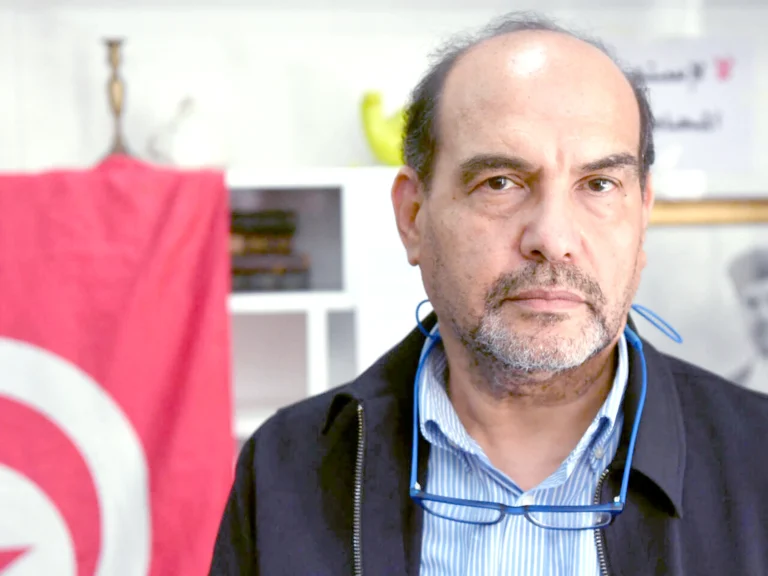
Tunis – A court in the capital, Tunis, sentenced former head of the National Anti-Corruption Authority, Chawki Tabib, to 10 years in prison.
This followed his conviction on charges of forgery and using falsified documents during his tenure as head of the authority.
A case related to an official report
The doctor’s lawyer, Samir Dilou, confirmed that the verdict was issued at the conclusion of a hearing held on Thursday.
He explained that the case stems from a report sent by the National Anti-Corruption Authority to Parliament in 2020
concerning suspected conflicts of interest involving former Prime Minister Elyes Fakhfakh.
According to available information, the report prepared by the Authority at that time included accusations
that Fakhfakh had failed to relinquish his shares in a waste management company that had secured government contracts.
This led to widespread political controversy in Tunisia at the time.
Chawki Tabib is one of Tunisia’s most prominent lawyers and previously served
as the head of the Tunisian Bar Association. He has defended a number of opposition figures.
Tabib faces several other cases related to what Tunisian authorities describe
as “violations” in the management of the National Anti-Corruption Authority.
In addition, there are accusations of embezzlement and money laundering during his tenure as head of the Authority.
Dissolving the Anti-Corruption Commission
Tunisian authorities arrested the doctor last April as part of ongoing investigations into corruption
and mismanagement within the National Anti-Corruption Authority.
Chawki Tabib headed the Authority from 2016 to 2020. Following his tenure,
Tunisian President Kais Saied dissolved the Authority in the summer of 2021
as part of exceptional measures that included suspending parliament and dismissing the government.
The case has sparked widespread reactions within Tunisian political and human rights circles.
This comes amidst ongoing debate regarding the judicial process
and the prosecution of political figures and former officials during the current period.
For years, Tunisia has been experiencing sharp political divisions and tensions related to issues of freedoms and the fight against corruption.
This coincides with a campaign of legal prosecutions targeting a number of politicians and former officials.