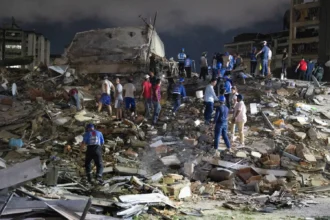
Political circles across the Middle East are anxiously awaiting the outcomes of ongoing diplomatic talks behind closed doors. Responsible sources reported that there is no Israeli approval yet for the proposed truce agreement South Lebanon framework. This stubbornness persists despite intense communications conducted by the Lebanese side in close coordination with the United States. Washington is actively seeking a final formula that ensures a comprehensive halt to all military operations. Leaked data points to a potential truce declaration by midnight tomorrow if obstacles are cleared.
Lebanese and American Efforts to Formulate the Truce
Sources clarified that the Lebanese government is exerting doubled efforts alongside the current US administration. Washington plays the role of the primary mediator to guarantee the drafting of an accord ensuring sustainable calm on the shared border. Intense, continuous communications are underway with Israeli factions to secure full compliance with items of the potential truce. Field data indicates high-level logistical coordination to ensure the practical enforcement of the comprehensive agreement on the ground upon announcement.
Lebanon seeks to solidify national sovereignty and prevent any future aerial or terrestrial violations. The Lebanese side demands strict international guarantees binding Tel Aviv to halt exploratory sorties by its warplanes. The American proposal includes detailed clauses regarding the dense deployment of the Lebanese Army in border territories. This sovereign step aims to reassure the international community and restore stability to the impacted southern governorates.
Israeli Stances and Severe Truce Conditions
The Israeli government has not declared its final, decisive stance regarding the proposed ceasefire up to this hour. Widespread Arab and international anticipation prevails to see the extent of the cabinet’s acceptance of conditions formulated by Beirut and Washington. Military analysts believe the Israeli hesitation stems from a desire to impose additional, complex security conditions. Field tension persists along the Blue Line concurrently with these continuous political maneuvers.
Diplomatic circles fear the possibility of negotiations collapsing and a sudden escalation in mutual artillery bombardment. Israeli military chiefs insist on retaining the right to swift military retaliation whenever a threat emerges. This specific condition represents the fundamental point of contention hindering the official signing of the temporary peace treaty.
Regional Impacts and the Future of Stability
Experts anticipate that the announcement of a ceasefire will significantly contribute to lowering hot regional tensions. The accord opens real opportunities to strengthen international cooperation to protect defenseless civilians and rebuild devastated villages. Conversely, an Israeli rejection will cause the continuation of violent military escalation and the destruction of remaining infrastructure. This dark scenario threatens security and stability across the entire Middle East. Monitoring the secrets of the truce agreement South Lebanon remains the primary driver of political events in 2026.