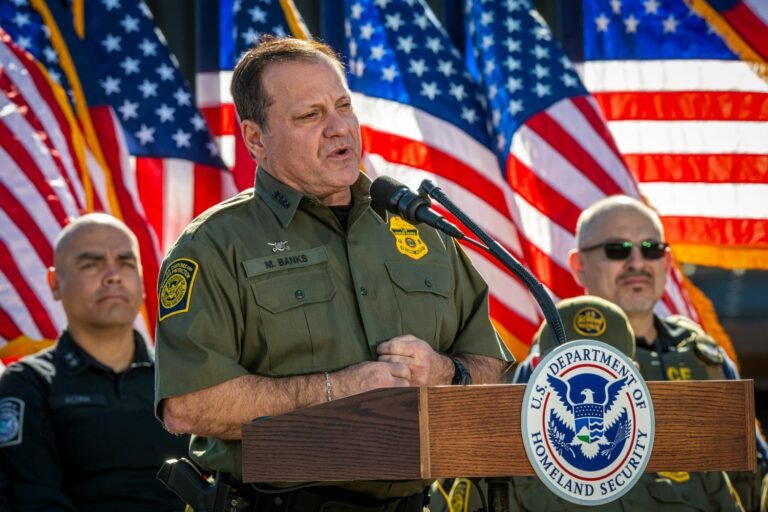
Washington – U.S. Border Patrol Chief Michael Banks has announced his resignation, joining a succession of high-level departures from immigration enforcement agencies since President Donald Trump’s return to the White House. This move reflects the profound structural changes currently reshaping the security institutions responsible for border and immigration policy.
Praise for “The Most Secure Border Ever”
In an official statement, Customs and Border Protection (CBP) Commissioner Rodney Scott expressed his gratitude for Banks’ decades of service. Scott noted a dramatic shift under Banks’ leadership, stating the situation moved from “chaos” to what he described as “the most secure border in the history of the United States.”
The “Banks” Doctrine: Harsh Enforcement and Urban Operations
Michael Banks was widely regarded as the operational arm of Trump’s hardline immigration agenda. Under his command, Border Patrol operations expanded beyond the physical border to include:
- Large-scale raids: Targeted inspections within major U.S. cities.
- Interior arrests: Engaging in immigration enforcement far from traditional entry points, sparking significant debate over the agency’s jurisdictional boundaries.
Interior arrests: Engaging in immigration enforcement far from traditional entry points, sparking significant debate over the agency’s jurisdictional boundaries.
Banks’ resignation follows a series of shakeups within the Department of Homeland Security (DHS). In March, Trump replaced DHS Secretary Kristi Noem and demoted several high-ranking CBP leaders. This departure also coincides with Acting ICE Director Todd Lyons’ announcement of his intent to step down later this May.
Analysts suggest these resignations—whether voluntary or pressured—are designed to clear the path for leaders more closely aligned with the administration’s “Mass Deportation Plan,” as the nation awaits the next wave of appointments in sensitive security leadership roles.