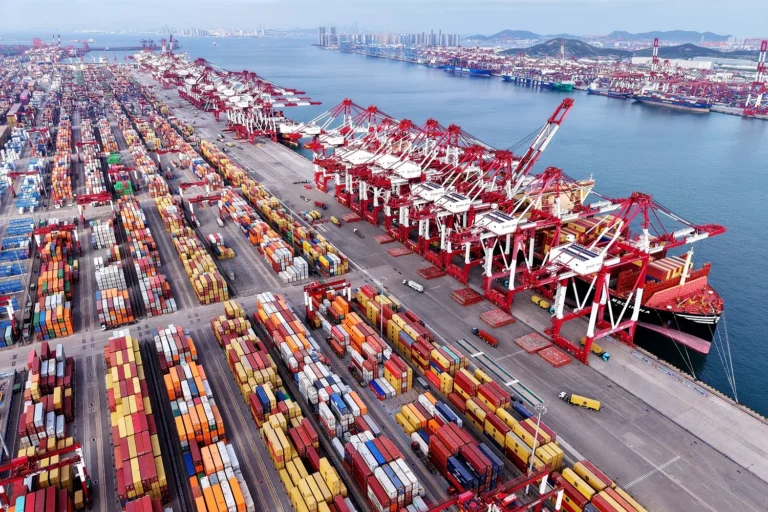
Beijing, China — China is shifting focus toward boosting foreign trade and expanding international economic cooperation to offset sluggish domestic demand and slowing economic activity. Consequently, the world’s second-largest economy aims to mitigate pressures stemming from declining consumption, reduced investment, and a prolonged real estate crisis. Furthermore, policymakers are working to shield the economy from heightened global market uncertainties.
Exports as a Growth Engine Amid Domestic Cooling
Chinese Premier Li Qiang called for stabilizing external demand, emphasizing that foreign exports—driven by global demand for artificial intelligence infrastructure and tech hardware—have become key growth drivers. Additionally, July economic indicators showed continued deceleration in industrial output and retail sales across domestic markets.
China’s economy expanded by 4.3% in the second quarter, marking its slowest pace in three and a half years and missing the government’s full-year target of 4.5% to 5%. Consequently, the export-led growth strategy faces persistent headwinds from geopolitical trade friction and softening global demand.
Stimulus Measures and Domestic Consumption Focus
Beijing reaffirmed its commitment to meeting annual growth targets through measures designed to raise household incomes, boost employment, and stimulate private investment in infrastructure. Additionally, authorities plan to channel capital into emerging high-tech sectors to rebalance the economic structure.
Finally, China faces a complex balancing act between driving exports and stimulating internal consumption to decrease external dependency. Ultimately, upcoming fiscal and monetary stimulus packages will prove crucial in determining the economy’s trajectory.