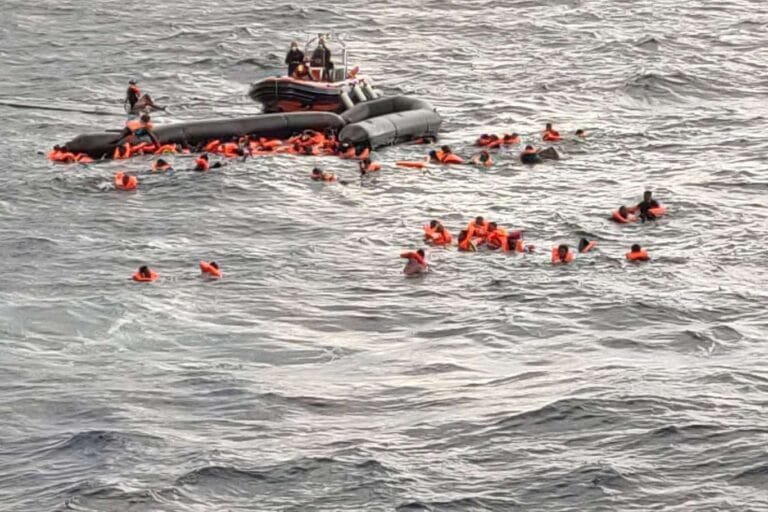
Tripoli, Libya — An NGO reported that seven migrants drowned while 50 others were rescued after their vessel foundered off the coast of Libya in the Mediterranean Sea. Consequently, this deadly incident underscores the growing risks facing individuals attempting the perilous sea crossing from North Africa to Europe. Furthermore, international organizations continue to warn against unseaworthy vessels deployed by human trafficking networks.
Rescue Operation and Offshore Hazards
Humanitarian rescue teams managed to pull 50 survivors from the overcrowded vessel, while retrieving seven bodies whose nationalities remain unconfirmed. Additionally, recurring shipwrecks in the central Mediterranean are largely attributed to poor vessel conditions, severe overcrowding, and a lack of essential safety equipment.
Unpredictable maritime conditions and sudden weather changes frequently exacerbate risks along these migration routes. Consequently, humanitarian agencies persist in calling for safer, legal pathways to prevent further loss of life at sea.
Libya as a Primary Transit Hub and Mitigation Challenges
Libyan coastal areas serve as a primary departure zone for migrants seeking entry into European nations across the Mediterranean. Additionally, rescue operations rely heavily on non-governmental organization vessels working alongside local authorities to respond to distress signals across international waters.
Finally, the persistence of these maritime disasters places Mediterranean nations under shared pressure to reinforce search-and-rescue protocols and dismantle smuggling operations. Ultimately, addressing irregular migration requires comprehensive international frameworks alongside sustained humanitarian aid.