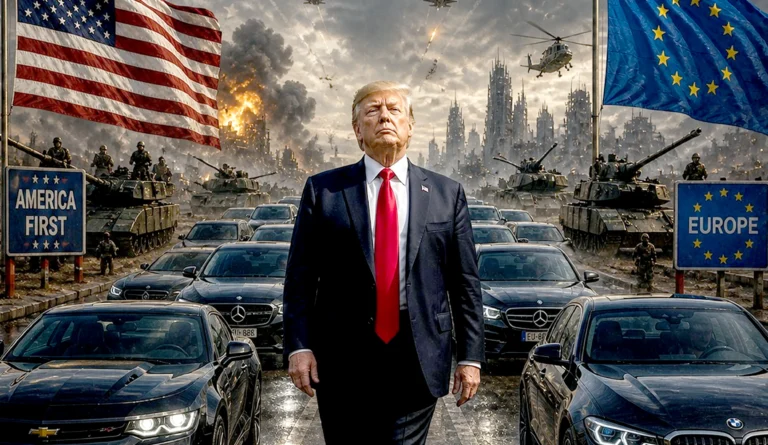
Washington, DC – US President Donald Trump announced new tariffs of 25% on cars imported from the European Union. This move is expected to reignite tensions in trade relations between the two sides, according to Forbes magazine.
Trump explained that the decision stems from the EU’s alleged failure
to fully comply with the trade agreement between the two parties.
He also indicated via TruthSocial that cars manufactured in the United States would be exempt
from these tariffs, in an effort to support domestic industry.
New trade escalation
The decision comes after a previous agreement reached last July. That agreement stipulated
that the United States would impose a 15% tariff on most European Union products.
In return, the EU would eliminate tariffs on the majority of American industrial goods.
However, this latest move represents a new escalation in trade relations between the two sides.
In remarks to reporters, Trump asserted that these tariffs are intended to encourage European companies
to relocate their factories to the United States at a faster pace.
He also claimed that this would boost the American economy and create new jobs.
Sharp European criticism
For his part, Bernd Lange criticized the US decision, considering it a repeated violation of trade agreements.
He indicated that this move reflects the unreliability of the US side in adhering to its international commitments.
Lange had previously accused the United States of breaching the trade agreement. This came especially after Washington moved to increase tariffs globally, following domestic court rulings related to trade policies.
Escalating political tension
The decision coincides with escalating political tensions between Washington and several European countries over
their stances on international issues, particularly those related to Iran.
Trump also announced the withdrawal of approximately 5,000 US troops from Germany, criticizing its positions.
He further threatened to impose additional tariffs on countries like Italy and Spain,
signaling a potential widening of the economic and political disputes between the two sides.