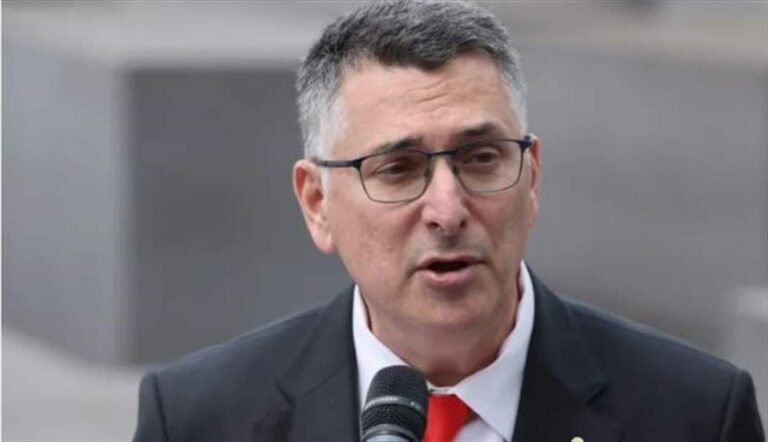
Washington – Israeli Foreign Minister Gideon Saar described the ongoing direct negotiations with Lebanon in the US capital as a “significant” and necessary step to resolve the crisis. In statements reported by Yedioth Ahronoth, Saar asserted that Tel Aviv harbors no territorial ambitions in Lebanese lands, claiming that the current military presence in the South is solely for “border security.” Obviously, Israel is attempting to ease international pressure through these remarks, urging the Lebanese government to take steps to assert its sovereignty and prevent military activities, as a primary condition for a full withdrawal.
Washington Negotiations: Can US Mediation Craft a “Permanent Truce”?
Saar’s statements coincide with the start of a direct negotiation marathon sponsored by the White House, marking the first time both parties have sat face-to-face to end the long-standing state of war. Clearly, the US administration is pushing hard for a formula that secures Northern Israel while guaranteeing independent Lebanese decision-making. As a result, observers believe these negotiations go beyond a mere ceasefire, attempting to draft new rules of engagement to prevent the recurrence of armed conflict in the near future.
The Lebanese Stance: “No Compromise on Sovereignty” and a Return to 1949
On the other side, Lebanese President Joseph Aoun clarified Beirut’s position, emphasizing that Lebanon’s goal at the negotiating table is to officially “end the state of war,” in line with the historic 1949 Armistice Agreement. Accordingly, Lebanon rejects any clauses that might grant Israel the “right to intervene” or infringe upon national sovereignty. Amid this diplomatic tug-of-war, the ultimate challenge remains reconciling Israel’s demand for “security guarantees” with Lebanon’s demand for “full sovereignty,” as the world awaits the results of the anticipated “Washington Agreement.”