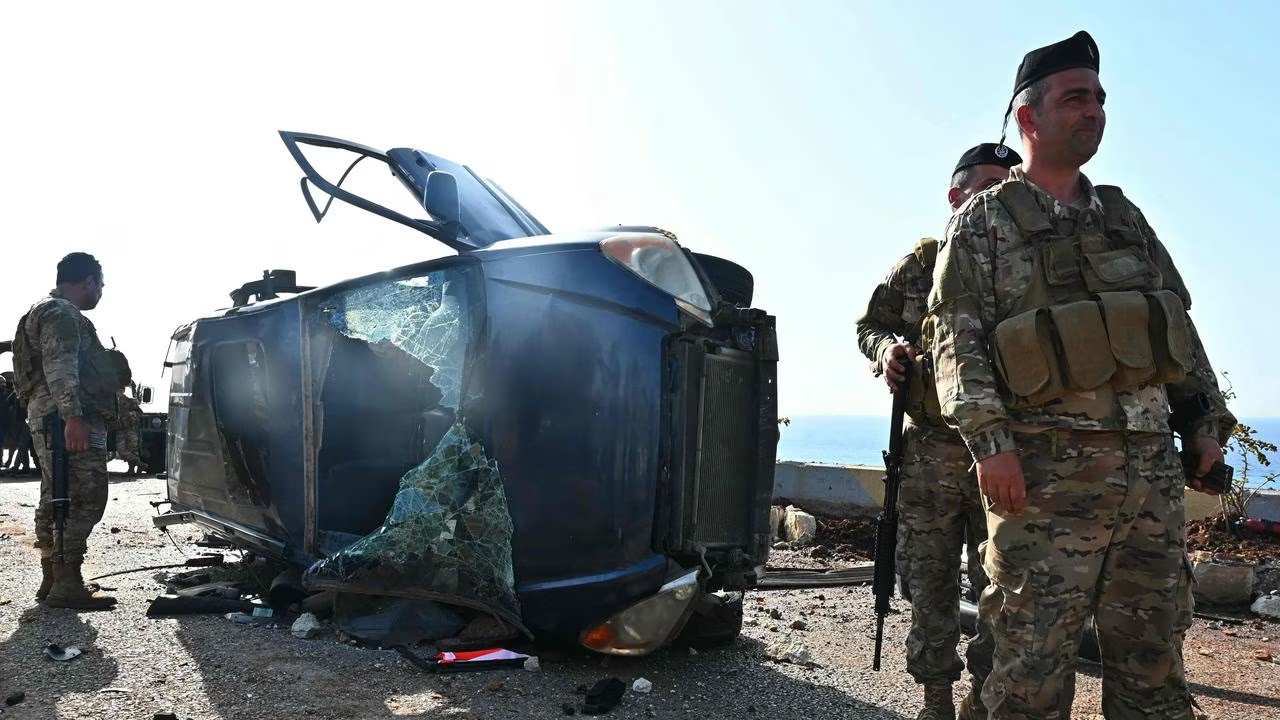
Beirut – In a grave field development, the Lebanese Army announced that two of its soldiers were injured in an Israeli airstrike directly targeting Lebanese forces and rescue teams during a humanitarian mission in the southern village of Majdal Zoun. The official statement clarified that the targeted forces were performing field tasks related to relief operations, making the strike a blatant violation of international conventions protecting relief teams and national armies in humanitarian roles. Obviously, the incident occurs at the peak of an unprecedented military escalation in Southern Lebanon, placing the region on the brink of an open and comprehensive confrontation.
Majdal Zoun in the Crosshairs: How Did a Rescue Operation Become a Target?
The strike occurred while military and civilian teams were attempting to evacuate the wounded or provide aid in the border area, resulting in direct injuries among personnel deployed at the site, as reported by Reuters. Clearly, the lack of immediate comment from the Israeli side adds ambiguity to the situation, while analysts view it as an escalatory message aimed at restricting the Lebanese Army’s movement in forward positions. As a result, a state of military alert has prevailed across Lebanese sectors, with close field monitoring to prevent the situation from sliding into bloodier scenarios.
The Specter of Total War: Can International Pressure Curb Border Escalation?
This strike coincides with escalating reciprocal military operations and daily airstrikes, raising genuine international fears of the conflict expanding into the Lebanese heartland. Accordingly, experts believe that directly targeting the national army represents a “turning point” that could trigger different political and military reactions. Amid continued diplomatic deadlock, the question remains whether international parties can intervene to enforce a calm that guarantees the protection of civilians and rescue teams, as southern villages transform into a “war zone” threatening the fragile regional stability in the Middle East.