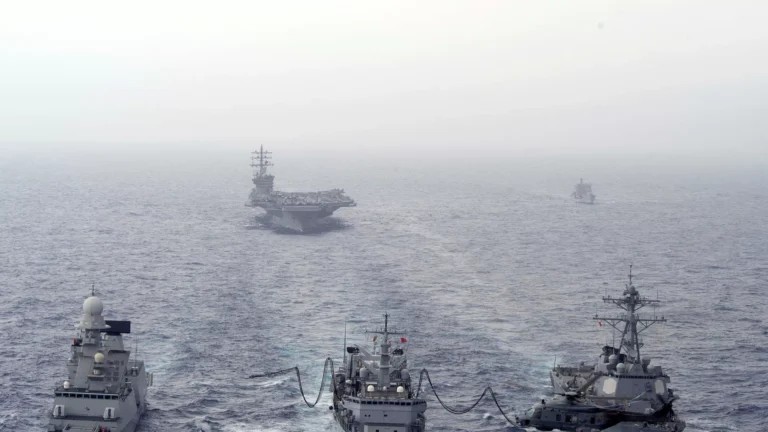
Washington, DC – Late Sunday night, Washington time, the US Central Command (CENTCOM) announced a new tally of its ongoing military operations in the vicinity of the Strait of Hormuz. It confirmed that naval forces participating in the blockade against Iran have forced 38 commercial vessels and tankers to change course or return to their ports of origin since the blockade went into effect.
Documenting field operations
U.S. Central Command released a video on its official platforms documenting a portion of U.S. military operations. The footage showed warships and helicopters intercepting vessels attempting to transit the strategic strait. CENTCOM explained that these actions are part of the strict implementation of the maritime blockade mission, which aims to prevent commercial and shipping flows to and from Iranian ports. This is part of Washington’s strategy of direct military pressure.
Tensions escalated after diplomacy failed.
This naval blockade, officially announced by the US military on April 13, represents a major escalation following the failure of the first round of negotiations between the United States and Iran in Pakistan. With the collapse of the diplomatic track, Washington has moved to a phase of “economic and military strangulation.” The Strait of Hormuz, through which a fifth of the world’s oil supply passes, has thus been transformed into a closed military operations zone, effectively barring all maritime traffic associated with Iran.
The repercussions of the blockade on maritime security
The announced figures (38 ships) indicate the effectiveness Washington is attempting to demonstrate in imposing its will on vital waterways. This comes despite international warnings about the repercussions of this move on global energy prices and maritime security.
Amid this mobilization, political circles are awaiting the White House “situation room” meeting. This meeting is expected to determine whether Washington will continue with the comprehensive naval blockade or open a new avenue for negotiations based on recent proposals. This all unfolds against a backdrop of fears of a direct confrontation should Tehran decide to attempt to break this military encirclement by force.