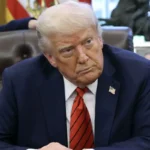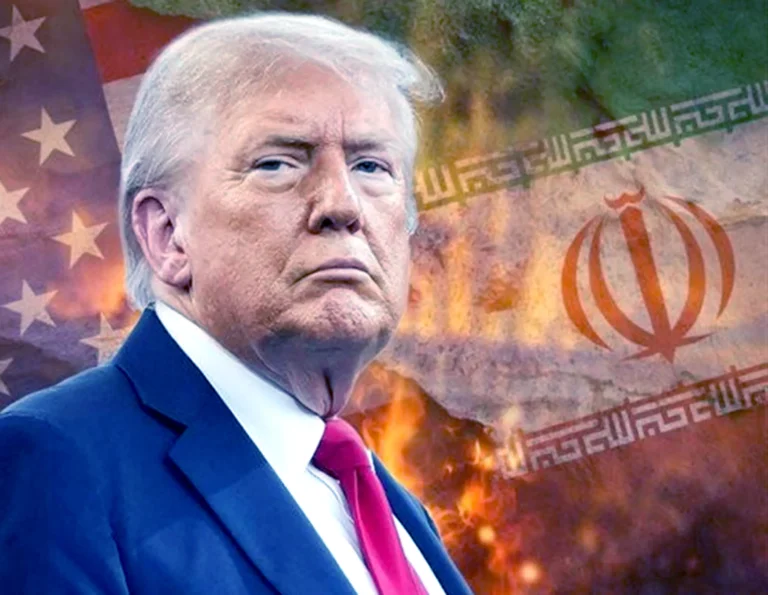
Washington – US President Donald Trump stated that military operations linked to the escalation with Iran are not subject to any specific timeframe, emphasizing that his administration sees no need for urgency in resolving this file. Trump clarified that “time is not a pressure element for Washington,” preferring a strategy of deliberation to achieve maximum strategic pressure without becoming embroiled in hasty decisions. Accordingly, the future of the US-Iran confrontation 2026 represents a new phase of long-term conflict management, aimed at reshuffling cards and strengthening the United States’ negotiating position.
Attrition Strategy: Why Does Trump Reject “Zero Hour”?
The current US administration’s vision centers on maintaining pressure through military and economic tools while avoiding a slide into a full-scale war that could raise the cost of confrontation. Obviously, the absence of a timetable aims to gradually deplete Iranian capabilities at a time when international interests are intertwined and oil markets are increasingly sensitive. As a result, observers believe Trump is betting on a “pulse-based” pressure system, leaving the door for negotiation open but on Washington’s terms and timing.
Securing Navigational Corridors: Energy Challenges Amid “Cautious Calm”
These statements come as the Gulf region and the Strait of Hormuz remain under security scrutiny, where any maritime incidents directly affect global energy supplies. Certainly, Washington seeks to maintain military superiority in vital corridors as a continuous leverage tool without the need for a large-scale direct clash. Accordingly, the future of the US-Iran confrontation 2026 remains suspended between calculated escalation and open diplomacy, with the naval blockade continuing as a constant element in the White House’s “unlimited time” equation.