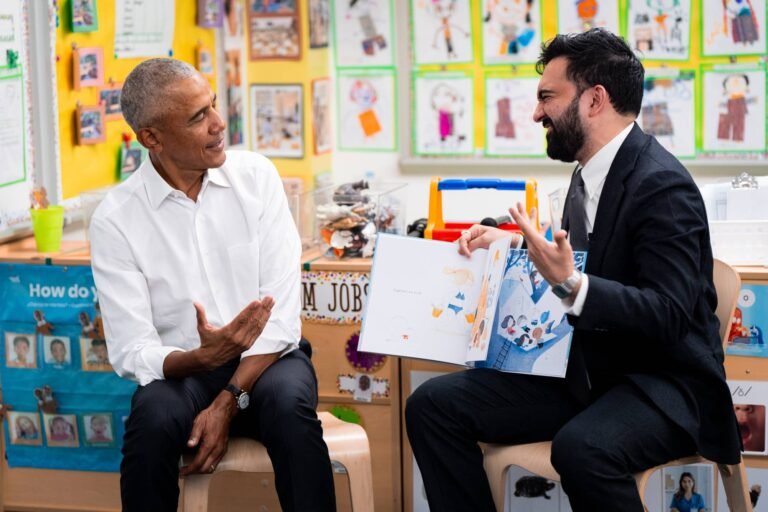
New York, USA – New York City witnessed a meeting characterized by spontaneity and symbolism as former US President Barack Obama met with local politician and New York State Assembly member Zahran Mamdani inside a children’s daycare facility. This unconventional meeting took place on the sidelines of a social event dedicated to supporting early childhood programs, highlighting urgent educational and social issues in high-density areas. Accordingly, the Obama and Zahran Mamdani meeting represents a significant intersection between high-level political experience and local field work, within the shared pursuit of enhancing investment in the educational infrastructure for future generations.
Investing in Childhood: The Core of the Discussion Between Obama and Mamdani
The conversation between the two parties addressed ways to develop pre-school education, focusing on the role of community institutions in providing equal opportunities for children across New York’s neighborhoods. Obviously, Obama showed a keen interest in following initiatives aimed at building a solid educational foundation, considering that the future stability of American society begins with the quality of education in early life stages. As a result, the meeting emerged as an informal platform to exchange visions on how to expand government support for childcare programs and develop early educational curricula.
Widespread Interaction and a Shift Toward Social Priorities in American Discourse
The scene sparked significant interaction on social media platforms, with observers considering it a symbolic move reflecting a re-focus on social files in American public debate. Certainly, choosing a “daycare” as the venue for this meeting added a human touch that transcends rigid political protocols, reinforcing both parties’ message on the necessity of placing education at the top of national priorities. Accordingly, the Obama and Zahran Mamdani meeting stands as a testament to the importance of direct engagement with issues that matter to American families and the need for collaborative efforts between past leadership and current politicians to achieve a comprehensive educational renaissance.