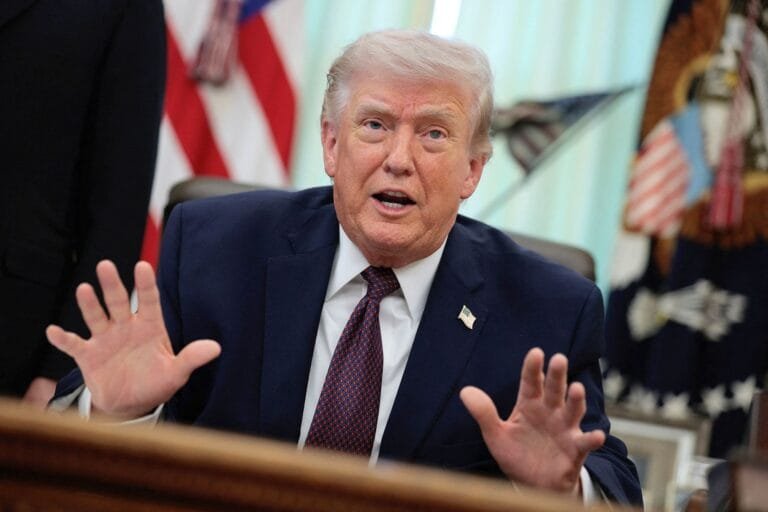
Washington – Axios reported that Donald Trump would welcome and be happy to see a near end to the fighting between Israel and Lebanon. This position comes if both sides succeed in reaching an agreement that ends field confrontations and restores the lost calm to the region. Furthermore, observers believe this trend reflects the US administration’s desire to cool down burning fronts before the regional crisis worsens. Accordingly, the potential Lebanese-Israeli agreement represents a vital diplomatic exit to avoid an all-out war. In this regard, political circles in Washington and Tel Aviv are monitoring the parties’ seriousness in engaging in a serious negotiation path.
Conditional Welcome for a Comprehensive Agreement Ensuring Long-Term Stability
The report quoted informed US sources stating that Trump views any settlement ending the current fighting with clear positivity. Obviously, this welcome is conditional on drafting an integrated agreement that addresses the core reasons for the recent escalation. As a result, the American vision aims to achieve sustainable stability that prevents the recurrence of military clashes in the long run. In addition, the potential Lebanese-Israeli agreement contributes to easing economic and security pressures on residents of border areas in both countries. However, technical and security conditions regarding border arrangements remain the most prominent obstacle to completing this settlement.
Washington Confirms No Official Ceasefire Request Made to Israel
A senior US official clarified that the United States has not yet submitted any official request to the Israeli government for a ceasefire in Lebanon. Certainly, this position reflects the continued cautious approach Washington follows in managing this complex file. Accordingly, analysts believe the US administration is giving the Israeli side time to achieve specific military objectives before entering final negotiations. On the other hand, the American timing for any official call is linked to how mature the potential Lebanese-Israeli agreement is on paper. In the same context, US diplomacy seeks to avoid any announcement that might seem like uncalculated pressure on allies.
Ongoing Diplomatic Moves to Contain Escalation and Prevent Wider Confrontations
These statements come at a time when intensive international efforts continue to contain the accelerating military escalation between Israel and Lebanon. Obviously, international mediators are seeking to reach precise understandings that limit tensions and prevent the conflict from expanding in the Middle East. As a result, the potential Lebanese-Israeli agreement gains double importance as it represents the cornerstone of regional security stability. In addition, major powers are betting that political solutions are the only ones capable of securing vital corridors and ensuring the return of displaced persons. Ultimately, the field scene will remain the final judge of the success of these diplomatic efforts in defusing the crisis.