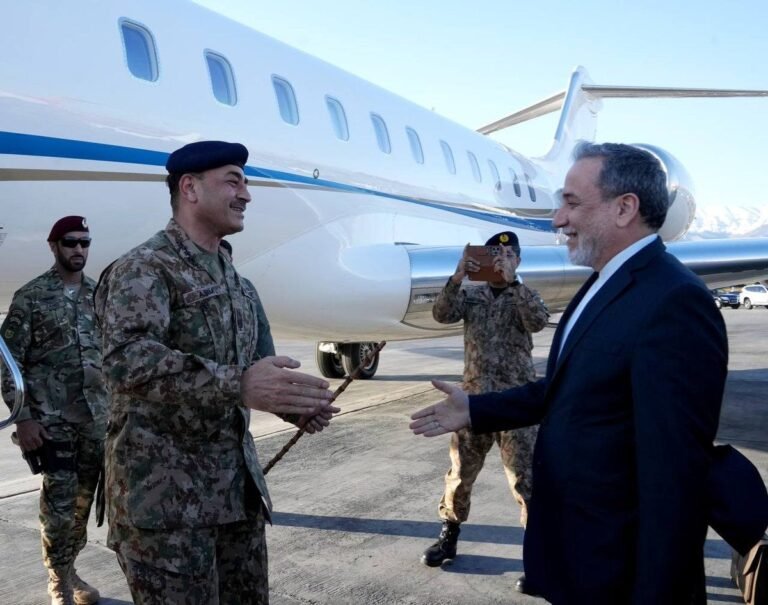
Tehran, Iran – In a diplomatic and military meeting of major strategic significance, Iranian Parliament Speaker Mohammad Bagher Ghalibaf met today in Tehran with Pakistani Army Chief of Staff General Asim Munir, who is currently visiting the Iranian capital. Sensitive security and regional issues topped the agenda, primarily arrangements for the anticipated second round of negotiations between the United States and the Iranian regime.
Close coordination and minimizing disagreements
Official photos released after the meeting showed an atmosphere of close coordination, as both sides sought to align their positions before the start of the second round of negotiations. This round is seen as a crucial opportunity to determine the future of the conflict in the region. In this context, a senior Iranian official told Reuters on Thursday that the Pakistani army chief’s visit had significantly contributed to “narrowing the differences” on some outstanding issues. He also indicated that hopes had increased for an extension of the current ceasefire.
Pakistan’s role: guarantor and mediator
The Pakistani army is playing a pivotal role at this stage as a mediator or security guarantor, leveraging its balanced relationships with international and regional powers. The Iranian official explained that the visit bolstered expectations for a second round of direct talks with Washington. He also affirmed that “there are greater hopes for extending the truce.”
The nuclear obstacle remains.
Despite the positive atmosphere, the official noted that “fundamental differences” remain regarding the nuclear issue; the fate of Iran’s highly enriched uranium has yet to be decided. Furthermore, the duration of the proposed nuclear restrictions is still the subject of heated debate. Observers believe that General Asim Munir’s role is focused on overcoming logistical and security obstacles and providing on-the-ground guarantees that might encourage the parties to delve into the more complex details of the “nuclear file.” These moves come amidst international anticipation of the upcoming round of negotiations in Islamabad. Qalibaf is thus seeking to present the regime’s new vision, which balances preserving its technical capabilities with the desire to alleviate military and economic pressure, supported by active Pakistani mediation.