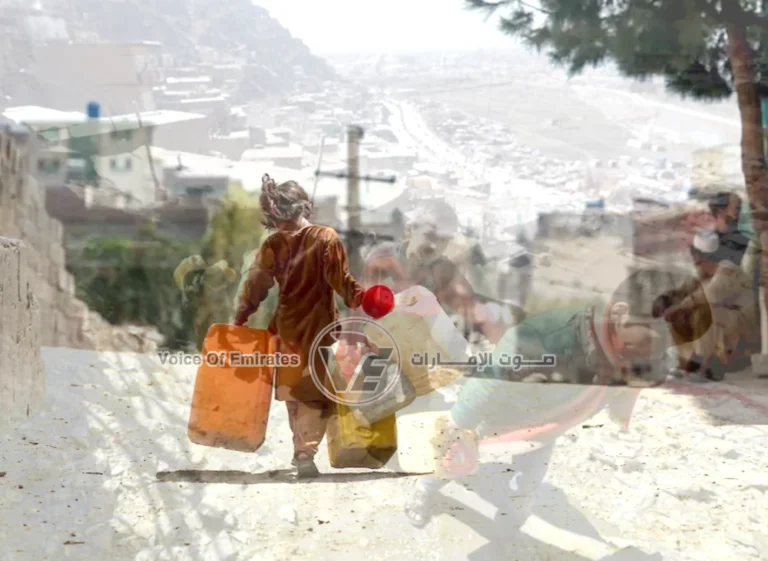
Kabul, Afghanistan – The Afghan capital, Kabul, is experiencing a worsening water crisis due to rapid population growth and declining rainfall. This has led to an alarming drop in groundwater levels. Warnings are being issued of dire humanitarian consequences if urgent action is not taken.
Mutiullah Abid confirmed that the water situation in Kabul has become “critical.” He indicated that the crisis stems from several key factors, including rapid population growth, declining rainfall, and a significant increase in water consumption.
A sharp decline in groundwater
Experts indicate that groundwater levels in Kabul are declining at an alarming rate. This threatens the main water sources upon which the population depends.
They warned that if the current situation continues without a radical change in water resource management, it could lead to an unprecedented catastrophe within the next ten years.
The suffering of Kabul residents in poor areas
Residents of impoverished neighborhoods in Kabul suffer from a severe shortage of potable water. This forces them to use unsanitary sources or buy water at exorbitant prices from street vendors.
These conditions exacerbate the already difficult living conditions for low-income families, and this situation persists in the absence of sustainable solutions.
Calls for reform in resource management
Experts have called for the adoption of more effective water management policies in Kabul. These policies include water conservation, infrastructure development, and the promotion of alternative water sources.
They stressed that addressing the crisis requires swift action to prevent the situation from worsening and escalating into a large-scale humanitarian crisis in the near future.