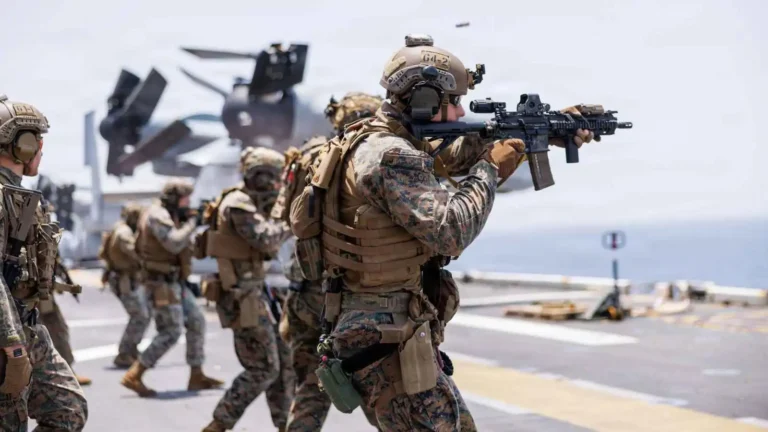
Washington – The US Central Command officially announced an increase in the toll of US troop casualties since the outbreak of military confrontations with Iran. The issued statement confirmed 13 soldiers killed and 399 others wounded with varying injuries, representing one of the most sensitive confrontations in the region. Furthermore, these figures reflect the intensity of the combat operations currently taking place across different fronts. Accordingly, the US Army in confrontation faces extremely complex field and logistical challenges. In this regard, political circles await the implications of these losses on future US military strategy.
Details of Military Operations and the Nature of Injuries Among US Soldiers
Central Command confirmed that the fatalities occurred during direct clashes and attacks targeting US troop concentrations in vital locations. Obviously, injuries varied between critical, moderate, and minor cases, necessitating a broad medical mobilization at military bases. As a result, a large number of the wounded were evacuated to advanced hospitals inside and outside the United States for treatment. In addition, reports indicate that the expansion of the geographic scope of confrontations contributed to the increased number of wounded. However, the US Army in confrontation continues to execute its combat missions despite increasing pressure on the field medical system.
International Pressure for De-escalation and Warnings of a Wider Regional Confrontation
These human losses come at a time when military operations are witnessing a noticeable escalation in the intensity of mutual strikes between the two sides. Certainly, the international community feels increasing anxiety over the possibilities of the situation sliding toward a comprehensive and destructive regional war. Accordingly, international calls are increasing to contain the crisis and open urgent diplomatic channels to prevent the conflict from worsening. On the other hand, the importance of the Strait of Hormuz stands out as a pressing element in this war, given its direct link to global energy security. In the same context, experts believe the US Army in confrontation is trying to balance military deterrence with avoiding being dragged into long-term attrition.
Nature of Modern Warfare and Its Impact on Casualty and Injury Statistics
Military observers believe that the high number of wounded compared to the dead reflects the nature of advanced weapons used in the current conflict. Obviously, reliance on precision strikes leads to widespread injuries without falling into the massive death tolls seen in traditional wars. As a result, the military medical care sector faces unprecedented pressure to handle complex evacuation and surgical cases. In addition, this situation highlights the capabilities of the US Army in confrontation for logistical resilience under rocket attack fire. Ultimately, the course of the coming days will be the judge in determining whether the region is heading toward a forced de-escalation or an open-ended escalation.