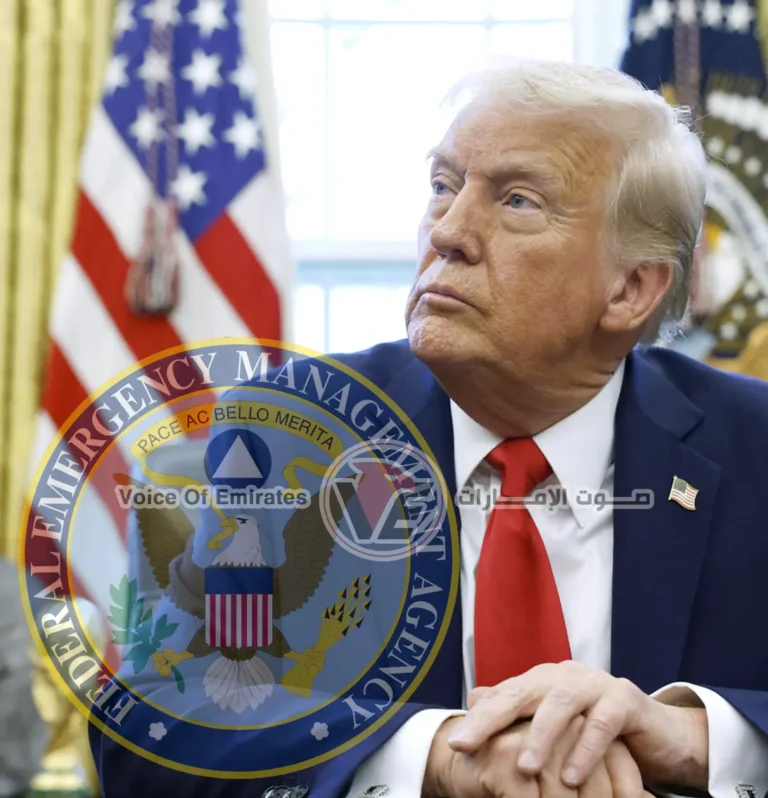
Washington, US – Concerns are growing in the United States about the future of the Federal Emergency Management Agency (FEMA) as the Trump administration seeks to curtail its role.
This comes as hurricane season approaches and the agency remains in disarray despite recent leadership changes.
The agency has faced significant pressure during the current administration’s first year, according to the website GRIST.
A major contributing factor was the near-total freeze on disaster response spending under former Homeland Security Secretary Kristi Noem.
This freeze resulted in billions of dollars being held up and relief efforts being delayed in several states.
Leadership changes without clear results
The appointment of the new Secretary of Homeland Security, Marquin Mullen, raised hopes for reform
within the agency, as he pledged to end the spending freeze and appoint permanent leadership.
However, officials emphasize that actual changes remain limited.
Many expenditures are still subject to higher-level approvals, and disaster preparedness programs remain frozen.
Hurricane season fears
Experts suggest the agency may be ill-prepared for the upcoming hurricane season,
given low employee morale and ongoing administrative uncertainty.
Essential programs, such as the flood insurance scheme, have also been impacted by contract terminations
and the suspension of discount programs. This increases the risk of future disasters.
The move is to transfer responsibility to the states
The US administration is pushing to reduce the federal role in disaster management,
placing greater responsibility on states for response and planning.
While some major states have advanced capabilities, experts warn that
others may struggle to shoulder the financial burden.
This could lead to significant disparities in disaster response.
Specialists emphasize that any radical shift in this direction will require time and substantial financial support.
They also caution that a rapid reduction in the federal role could exacerbate damage in the most vulnerable areas.