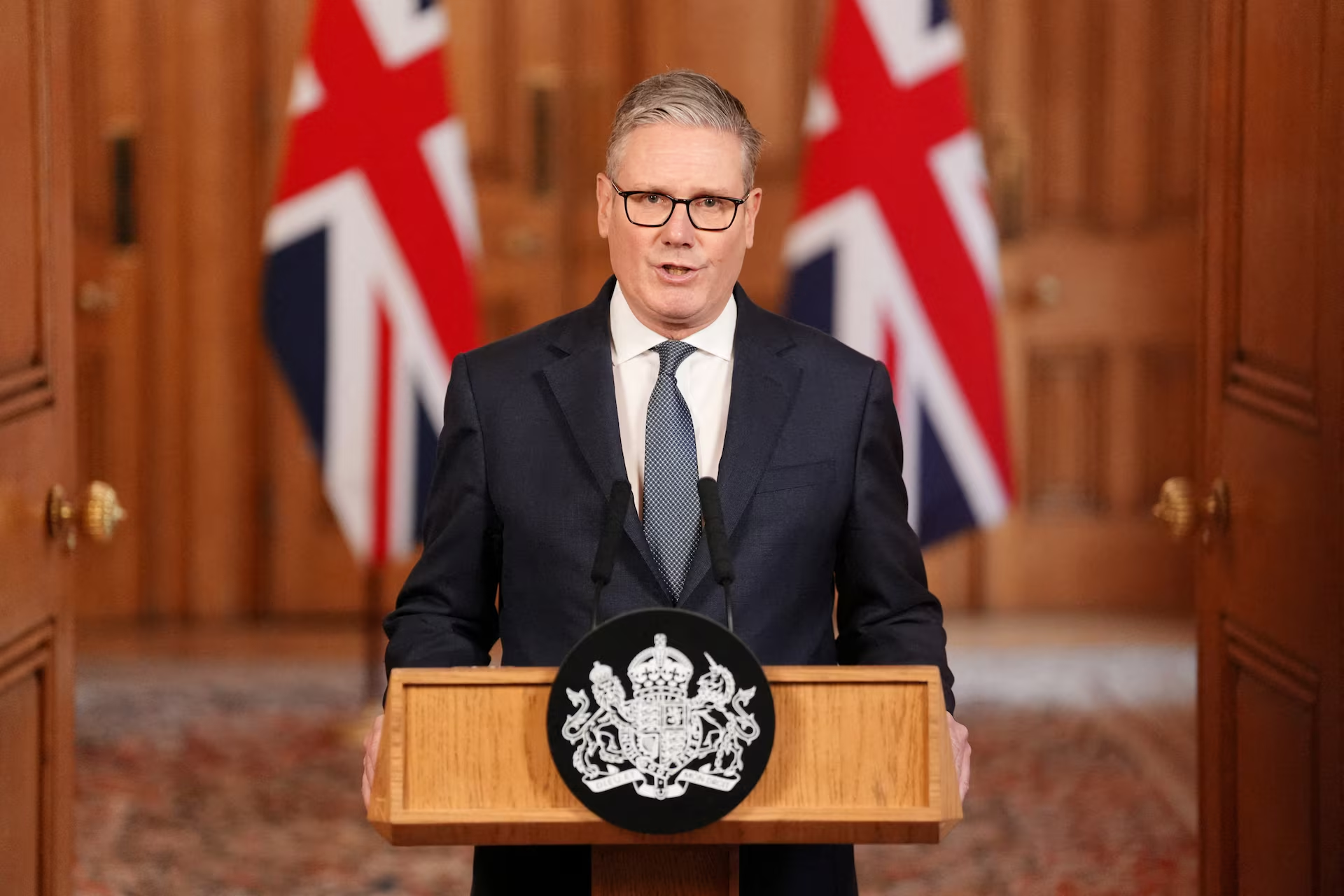
London – UK – The British Prime Minister described the ongoing aerial and artillery bombardment of Lebanon as a “mistake,” emphasizing the need for it to stop immediately and without delay. This firm stance reflects escalating international concern over the widening scope of military confrontation in the region in early 2026. Furthermore, the Prime Minister warned that continued escalation directly threatens international peace and security. Accordingly, London is leading intensive diplomatic moves to enhance regional stability in the Middle East. In this regard, the British government places the protection of civilians at the forefront of its current political discourse.
Repercussions of Military Operations on the Humanitarian Crisis
The Prime Minister explained, in statements carried by major British media outlets, that the continuation of military operations catastrophically exacerbates the humanitarian crisis. Obviously, the continuous bombing destroys infrastructure and threatens the lives of thousands of innocent civilians. As a result, the British official called on all concerned parties to exercise maximum restraint and return immediately to negotiations. In addition, he stressed that peace will not be achieved through armed force, but through serious dialogue that ensures regional stability in the Middle East. However, field conditions remain critical and require decisive international intervention to stop the bloodshed
Failure of Military Solutions and the Need for a Comprehensive Political Vision
The British Prime Minister emphasized that military solutions will never lead to ending the ongoing conflict; rather, they will further complicate the political scene. Certainly, expanding the scope of warfare will create long-term security repercussions that are difficult to control in the future. Accordingly, he stressed that top priority must be given to avoiding further human losses among the defenseless population. On the other hand, London rejects any justifications that lead to prolonging the confrontation which undermines regional stability in the Middle East. In the same context, major powers seek to crystallize a peace initiative that ends the escalating state of tension sustainably.
Intensive International Pressure to Contain the Crisis and Open New Paths
These strong statements come amidst an increasing state of tension in the region, with international warnings of a wider explosion. Obviously, the British position reflects a growing trend within the international community to pressure for immediate and comprehensive de-escalation. As a result, observers believe that the time has come to open a new political path that addresses the real roots of the crisis instead of sufficing with temporary security solutions. In addition, this position contributes to enhancing the chances of restoring regional stability in the Middle East during the coming phase. Ultimately, the world remains watchful of how the conflicting parties respond to these repeated international calls for peace.