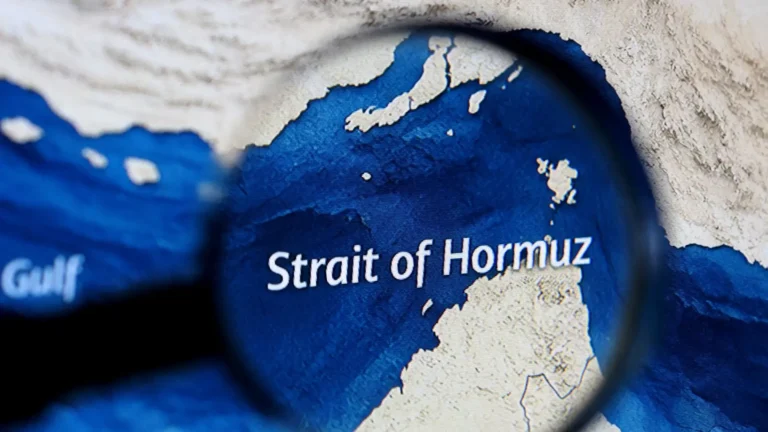
Seoul, South Korea – The South Korean government announced Wednesday that it has no current plans or intentions to pay transit fees for its ships passing through the Strait of Hormuz. The government denied reports that Seoul had yielded to Iranian demands to impose fees for maritime security.
Official and categorical denial
During a plenary session of the National Assembly’s (parliament) Budget Committee, Deputy Prime Minister Ko Yeon-chul, responding to lawmakers’ inquiries about the possibility of paying these fees, affirmed that the government “is not considering such a matter at all under the current circumstances.” This statement effectively puts an end to speculation raised by some local newspapers, which had reported that Seoul was exploring “financial” options to avoid disruptions to vital energy supplies from the Gulf.
Ship safety is a top priority
In monitoring the tense situation in the strait, Ko Yeon-chul revealed that after an analysis of the status of 26 South Korean vessels in the area, it was determined that five ships are currently en route to South Korean ports.
The Deputy Prime Minister emphasized that the government prioritizes the safety of navigation and the protection of ship crews. He added, “We will do our utmost to ensure the safety of these vessels and their unimpeded passage.”
Context of the maritime crisis
These statements come at a sensitive time, coinciding with the announcement of a ceasefire between Washington and Tehran. Iran seeks to consolidate its control over the Strait of Hormuz by imposing a new “toll system.” However, major international powers and Asian trading partners reject this system.
South Korea relies almost entirely on this waterway to secure its oil and liquefied natural gas needs. Therefore, the stability of navigation through it has become a matter of national security and economic importance for Seoul.