Vienna, Austria – Austria has strongly entered the fray of the escalating regional crisis, issuing an urgent appeal to all international parties to adopt diplomatic solutions as the only way to halt the bloodshed of military escalation.
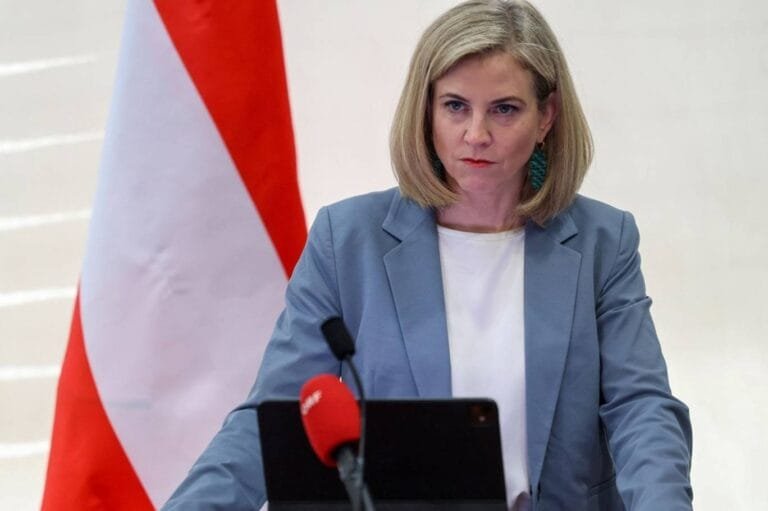
Following a high-level telephone call with her Iranian counterpart, Abbas Araqchi, Austrian Foreign Minister Beate Meinl-Reisinger stated that de-escalation in the Middle East has become an “urgent necessity” that cannot be postponed, warning of the region’s slide toward a comprehensive humanitarian catastrophe that may prove uncontrollable.
Three pillars of the Austrian initiative
In her official statement today, Saturday, April 4, 2026, Minister Meinl-Reisinger emphasized three key points, describing them as crucial to maintaining international peace and security. She stressed the urgent need for the immediate and complete restoration of freedom of navigation in the Strait of Hormuz to ensure the flow of essential goods, fertilizers, and raw materials.
She warned that continued threats to waterways would have dire humanitarian consequences, impacting global food security and exacerbating the suffering of people far removed from conflict zones. Vienna reiterated its unwavering support for any diplomatic path leading to a new and comprehensive agreement that guarantees full and transparent cooperation between Tehran and the International Atomic Energy Agency, thereby mitigating the risks of a nuclear confrontation. The Minister emphasized the importance of keeping communication channels open between adversaries, even at the height of military clashes, to reach binding agreements that halt retaliatory strikes and protect civilian infrastructure.
Critical timing and international pressure
These Austrian diplomatic moves come at a time of increasing international pressure to end the tit-for-tat military attacks and secure international shipping lanes. Observers believe the Austrian initiative reflects European powers’ concerns that targeting educational infrastructure and nuclear facilities in Iran could lead to long-term environmental and academic crises, the effects of which would extend beyond Iran’s borders, becoming a global, transcontinental crisis.
Vienna is expected to build on this dialogue to develop an international framework that guarantees the “neutrality” of waterways and civilian infrastructure in ongoing armed conflicts.