Oslo, Norway – In the heart of Oslo, the Norwegian capital, lies a library that operates in an unconventional way.
Instead of making books immediately available to readers, it houses literary works that will remain closed to the public for 100 years.
This cultural experiment aims to bring the voices of the present to generations yet unborn.
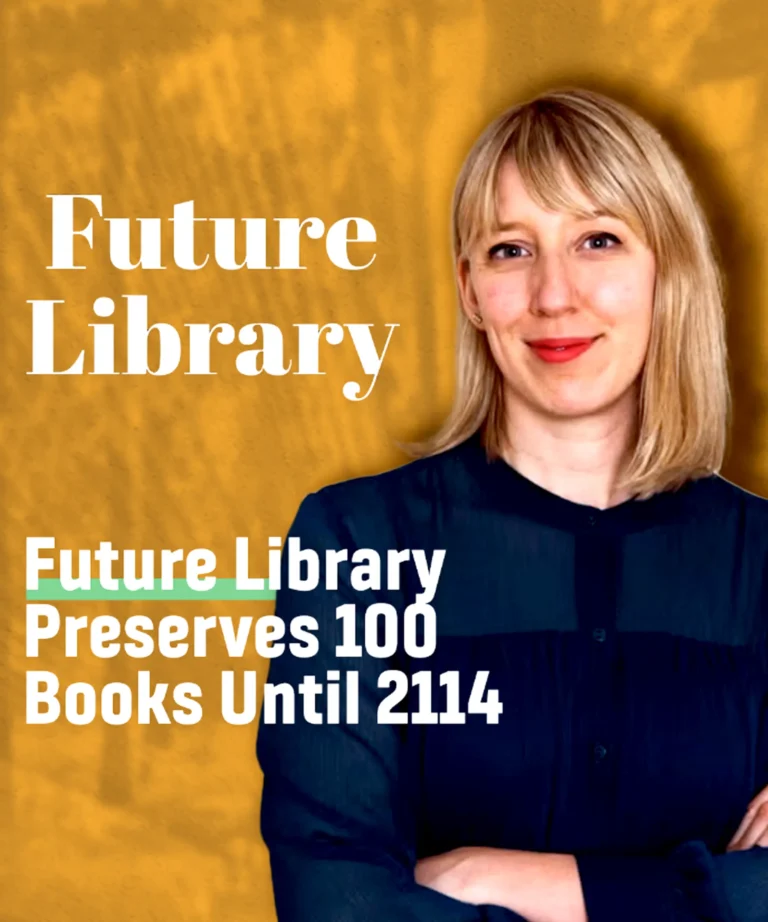
The idea for the “Library of the Future” originated with Scottish artist Katie Paterson, who launched the project in 2014.
She began by planting a forest of fir trees near Oslo, with the intention of using
the wood a century later to print the books collected for the project.
The project is like a huge cultural message
Each year, a selected author submits a new manuscript to the library, which remains unpublished and unread until 2114.
In this way, the project has become a monumental cultural message written by 21st-century authors to future readers.
The collection includes works by a number of well-known writers, and the submitted texts vary in genre,
ranging from novels and poetry to other literary forms.
Among the most prominent contributors is Canadian author Margaret Atwood, who submitted her work to the project.
Writers from diverse countries and cultures have also participated.
The unique aspect of the project lies in the fact that most of the contributors will not be alive when the books are opened.
The author submitting their manuscript today knows beforehand that they will not witness the readers reaction to it.
Perhaps no one from their generation will know how the world received it a century from now.
What do we want to leave for the generations that will come after us?
The project concept extends beyond the books themselves, encompassing the forest planted specifically
to provide the paper used for printing these works once the waiting period ends.
The trees are scheduled to be cut down in 2114, a century after the initiative’s launch.
The “Library of the Future” carries a message that transcends literature;
it poses a simple yet profound question: What do we want to leave for future generations?
In an age where information is consumed in seconds, this project has chosen to do the exact opposite:
to make the reader wait a hundred years to open a book.
Thus, the waiting itself becomes part of the narrative.
When 2114 arrives, the works will finally be opened and printed on paper sourced
from the forest that began its life with the project.
At that point, the unread manuscripts will transform into a literary message
from the 21st century to a distant future whose shape remains unknown.