
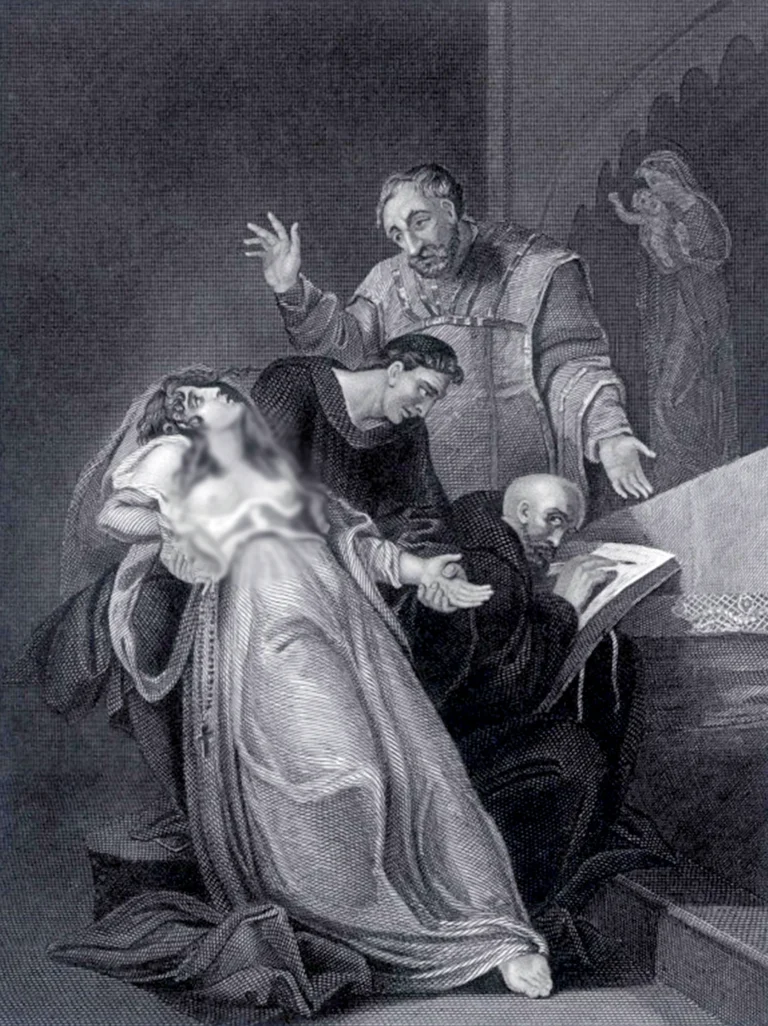
London, UK – Elizabeth Barton, historically known as the “Virgin of Kent,” is one of the most controversial figures in English history.
She rose to prominence in the 16th century for her religious pronouncements,
which many believed to be divine messages.
She later became a political opponent of King Henry VIII, and her life ended
with her execution in one of the most famous cases in English history.
Born in the English county of Kent, Elizabeth Barton worked as a maid before suffering
a mental illness that caused her to experience visions and claims to receive heavenly messages.
She quickly gained widespread popularity among the general public and the clergy.
Some considered her pronouncements to be religiously significant, and as a result, she became known as the “Virgin of Kent.”
Prophecies relating to religious and political matters
Barton’s influence grew after she joined a convent, where she began making prophecies concerning religious and political matters.
Most notably, she vehemently opposed King Henry VIII’s decision to divorce his first wife, Catherine of Aragon, and marry Anne Boleyn.
This decision later led to the schism between the Church of England and the Catholic Church.
The “Virgin of Kent” claimed that the king would face divine wrath and would not live long if he proceeded with his new marriage.
She also warned that his power would vanish and his end was near. The authorities considered
this a direct challenge to the prestige of the throne and an attempt to incite public opinion against the king.
A warning message to anyone considering opposing the king
As her influence among the people grew, Henry VIII ordered an investigation into her and several of her supporters.
She was accused of conspiracy, treason, and spreading false claims that threatened the stability of the kingdom.
After a controversial trial, Barton and several clergymen associated with her were convicted.
In 1534, Elizabeth Barton was hanged, and her head was displayed on a London bridge as a warning to anyone
who might consider opposing the king or questioning his legitimacy.
Several of her followers were also executed in the same case.
Historians believe that the story of the “Virgin of Kent” reflects the extent of the conflict
between political and religious authority during the reign of Henry VIII.
It also demonstrates how prophecies and religious beliefs could become major political issues.
While some consider her to have genuine religious visions, others believe she was a victim of the power struggle.
Thus, her story remains one of the most intriguing and enigmatic chapters in English history.